Date Created: 15.10.2026
Last Modified: 15.10.2026
Bunium ferulaceum, known in English as Balkan pignut, is a perennial herb in the carrot family (Apiaceae). It grows from an underground tuber and has finely divided leaves and small flowers in compound umbels. Its native range extends from the eastern Mediterranean to the Transcaucasus, including Cyprus; see the Kew taxon record.
Common Cypriot Names
A descriptive Modern Greek rendering of the Latin name is Βούνιο το φερουλόμορφο [vounio], meaning “Ferula-like bunium.” This is a translation, not a verified established common name. Cypriot names recorded for the plant include σταυροκάρυα [stavrokarya], associated with its use as a gathered food, and η κουμάκα [koumaka]. The meaning or origin of “κουμάκα” is not explained in the available record.
Common English Names
These names are not equally standardized. “Black caraway” is also used for other plants, so the scientific name is the clearest label.
Etymology of Bunium ferulaceum
The etymology of the genus name Bunium is uncertain. It is connected with an Ancient Greek plant name recorded by Dioscorides; proposed derivations link it either to βουνιάς, a kind of turnip, or to βούνιον, a name for an umbellifer with an edible tuber. The specific epithet ferulaceum means “resembling Ferula” or “Ferula-like,” possibly alluding to the finely divided leaves. The competing explanations of the genus name are outlined in Kew’s etymology entry.
Synonyms
- Carum ferulaceum (Sm.) Janch. (1907)
- Apium ferulaceum (Sm.) Caruel (1889)
- Bulbocastanum ferulaceum (Sm.) Nyman (1879)
These are the homotypic synonyms listed in the Kew taxonomic record.
Key Characteristics for Diagnostic Identification
Robert Desmond Meikle’s Flora of Cyprus, Volume 1 (1977), covers the Apiaceae and remains a foundational botanical work for the island. The features below combine the relevant botanical descriptions with Cypriot records.
- Underground organ: A tuber is a key feature of this perennial geophyte. In Cyprus, the gathered tuber is described as irregularly rounded, dark brown outside, and white inside.
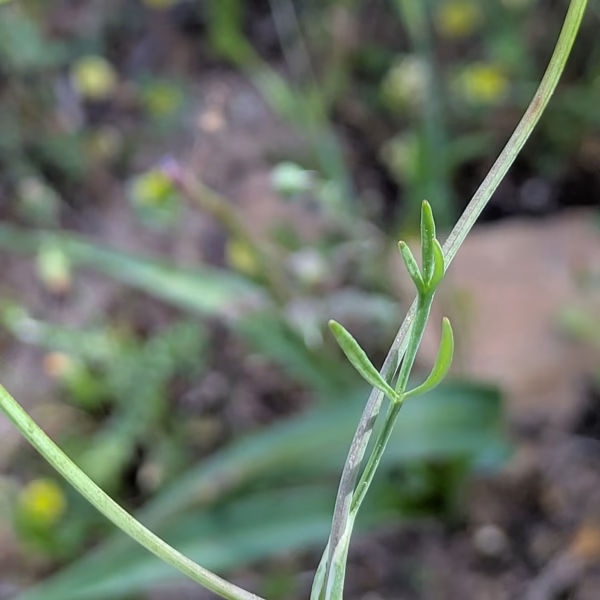
- Leaves: The leaves are repeatedly divided into slender, narrow segments. They are described as twice or three times pinnate, with linear lobes; the Cypriot flora checklist also notes finely divided foliage. This lacy outline is useful for recognition, but is not enough by itself to identify a wild Apiaceae safely.
- Stem and stature: The flowering stem is erect or ascending. Descriptions give heights from about 15 to 60 cm, with a Cyprus database listing about 50 cm. Height varies and should be treated as supporting evidence rather than a definitive character.
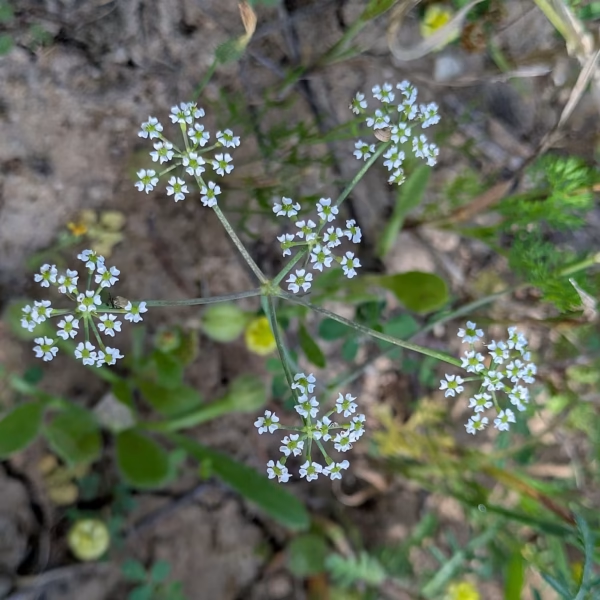
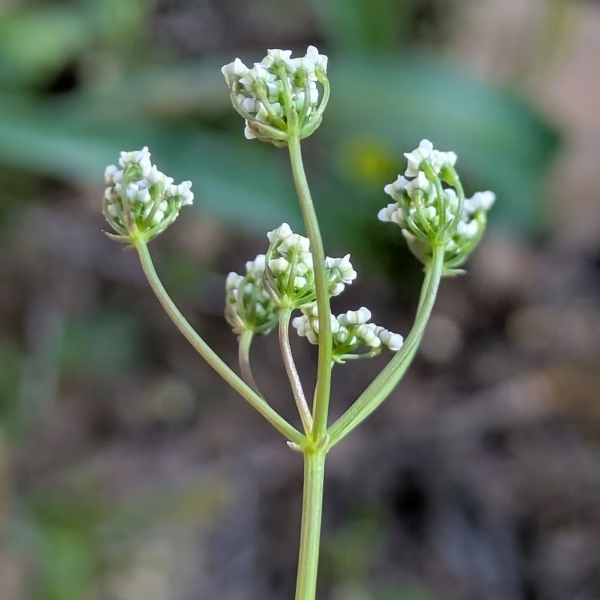
- Inflorescence: The flowers grow in compound umbels. Botanical descriptions report roughly 6–15 spreading rays; counts may vary between specimens.
- Flowers: The small petals are usually white, though pinkish flowers are also recorded in Cyprus. Each flower has five petals.
- Fruit and floral details: The fruit is oblong-cylindrical, about 5 mm in one regional description, with prominent thick primary ribs. Bracts are absent or few, sepals absent or minute, and the styles are approximately as long as the stylopodium. These details are especially useful when mature fruit is present.
- Cyprus comparison: The Cyprus checklist consulted records this as the island’s listed Bunium. Its combination of a tuber, finely dissected leaves, compound umbels, and ribbed fruit therefore helps distinguish it from other Apiaceae, although a full botanical key is still needed for difficult specimens.
Geographical Distribution and Habitat of Bunium ferulaceum
The species is native from the eastern Mediterranean to the Transcaucasus. In Cyprus, it is associated with cultivated or ploughed fields as well as rocky slopes, open scrub, and mountain meadows. These habitat types indicate that it is not confined to one kind of site. It grows on rocky slopes, open scrub, and montane meadows; local records also include cultivated fields and Limassol forest.
Toxicity and Safety
The tuber has a recorded Cypriot food use and is described as white inside with a coconut-like taste. A traditional food record is not a guarantee that every plant or preparation is safe. Do not eat a wild plant based only on this page or a photograph. Several members of Apiaceae look similar, and safe identification requires more than flower color or leaf shape.
Safety research is preliminary. In a 2022 study, Deghima and colleagues tested a hydro-methanolic extract of the aerial parts. A single high-dose acute mouse test reported no deaths or visible acute toxicity at 2,000 mg/kg. That finding applies only to the preparation and short-term test used; it does not establish safety in humans, during pregnancy, with long-term use, or for every plant part. The study is indexed at PubMed.
Medicinal Properties
What Research Has Tested
Research remains preclinical. A 2022 study analyzed phenolic compounds in aerial parts and tested antioxidant and anti-inflammatory activity in laboratory assays and animal models. Activity in those experiments does not demonstrate that the plant treats an illness in people, and the study did not establish a human dose. Read the research abstract.
A later study tested tuber powder and a hydro-methanolic tuber extract in mice, reporting reduced acute inflammation in an experimentally induced ear-edema model. It also examined the tuber’s nutritional and phenolic composition. These findings are leads for further research, not clinical evidence; they should not be turned into a home remedy or dosage recommendation. See the tuber study.
Evidence Limits
The studies reviewed do not establish a clinically proven medicinal use, an effective human dose, or long-term safety. Cypriot records document the tuber chiefly as a gathered food, not as a treatment. Anyone considering a supplement or medicinal preparation should consult a qualified health professional, especially during pregnancy, when managing a health condition, or when taking medication.
Fascinating Insights About “Bunium ferulaceum”
A Cypriot Name Preserves a Food Tradition
The name “σταυροκάρυα” is associated with the tuber as a gathered food. A local account reports harvesting in March and May and describes the tuber as irregularly rounded, dark outside, and white within. The taste description belongs to that account and should not be assumed to apply to every specimen. See the food entry.
Its Botanical Name Dates to 1806
James Edward Smith published the name in 1806 in Flora Graeca Prodromus, a work associated with botanical study of the eastern Mediterranean. The name remains accepted in current plant taxonomy. See the publication record.