Date Created: 19.04.2022
Last Modified: 02.05.2026
Lagoecia cuminoides, known as Wild Cumin, is a distinctive annual herb in the Apiaceae family. It is easily recognized by its globular, thistle-like flower heads and feathery foliage. This species is common across the Mediterranean and is a frequent sight in the dry grasslands and rocky hillsides of Cyprus.
Common Cypriot Names
The formal Modern Greek name is Λαγοικία η κυμινοειδής [Lagikia-i-kiminoidis]. In Cyprus, it is called Λαγόκαιττος [Lagokaittos], meaning "hare's couch." This specific vernacular name and its meaning were documented by the botanist Athena Della in her extensive ethnobotanical research for the Agricultural Research Institute of Cyprus, noting that the soft, nest-like flower heads were believed to be where hares reside.
Common English Names
- Wild Cumin
- Fluffy Thimble
- Cumin-like Lagoecia
Etymology of Lagoecia cuminoides
The etymology of the genus name "Lagoecia" derives from the Ancient Greek "λαγώς" [lagos], meaning "hare," and "οἶκος" [oikos], meaning "house" or "dwelling." Together, they form the meaning "hare’s lodge" or "hare's nest," referring to the globose, feathery umbels that resemble the soft, sheltered beds hares make in the wild.
The specific epithet "cuminoides" is a combination of the Latin cuminum (derived from the Greek κύμινον [kyminon]) and the Greek suffix -οειδής [-oeides], which means "resembling." This refers to the plant's aromatic seeds and general appearance, which closely mimic those of the true spice cumin.
Key Characteristics for Diagnostic Identification
According to the definitive botanical keys established by Robert Desmond Meikle in his comprehensive Flora of Cyprus (Volume 1, 1977), this species is distinguished from other taxa of the genus in Cyprus (it is the only species of the genus here) by the below morphological features:
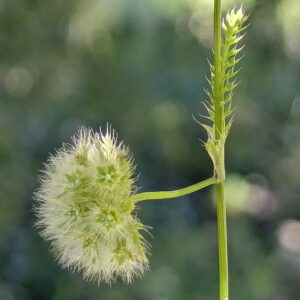
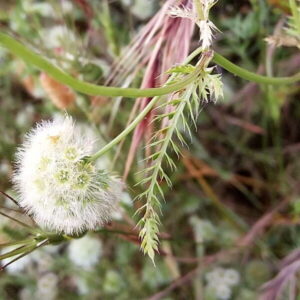
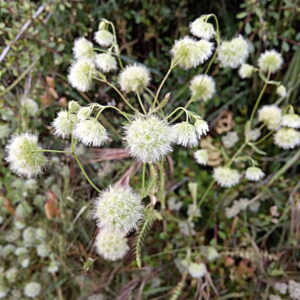
- Inflorescence Structure: The plant forms a dense, globose umbel (1–2 cm in diameter) that looks like a fluffy ball. This is a unique characteristic among Cypriot Umbellifers, where most species have flat or spreading umbels.
- Involucral Bracts: The bracts are deeply pectinate (comb-like) and pinnatifid. These feathery structures surround the flower head and are much longer than the actual flowers, providing a protective, "hairy" appearance.
- Floral Morphology: Each umbellet contains several sterile flowers but only one fertile flower. This reduction is a primary diagnostic SOS feature that differentiates it from nearly all other members of the Apiaceae family on the island.
- Fruit Development: The fruit is a single-seeded achene-like structure, covered with the persistent, feathery calyx teeth. Unlike the typical two-parted schizocarps of the family, Lagoecia cuminoides creates only one seed per flower unit.
- Calyx Teeth: The calyx segments are profoundly divided into linear, hair-like lobes. This is the most prominent diagnostic for the "thimble" texture, as these lobes remain visible and expand as the fruit matures.
Additional Identification Characteristics
Botanists like Davis (1972) emphasize the aromatic scent of the crushed seeds, which is nearly identical to commercial cumin. The stems are usually simple or sparingly branched, giving the plant a very vertical, "strict" appearance in the field compared to the bushy habit of Eryngium.
Botanical Structure and Floral Details of Lagoecia cuminoides
Foliage and Stem
The leaves are simply pinnate with ovate, deeply serrated leaflets. The stem is slender, glabrous, and often takes on a straw-colored or slightly reddish tint as the plant dries out toward the end of the spring season, making the green globular heads stand out significantly.
Geographical Distribution and Habitat of Lagoecia cuminoides
This taxon is native to the Mediterranean region, extending from Portugal and Spain through Italy and Greece to Turkey, the Levant, Iraq, and Iran. It thrives in dry, sun-exposed habitats, including garigue, batha, rocky pastures, and field margins. It prefers well-drained, often calcareous soils and avoids heavily shaded or waterlogged areas.
Distribution in Cyprus
Lagoecia cuminoides is widespread across the island and is found in almost all botanical divisions. It is particularly common in the Akamas Peninsula, the central Mesaoria plain, the limestone hills of the Troodos foothills, and the coastal areas of Paphos and Larnaca.
Elevation Range in Cyprus
The plant occupies a wide altitudinal range, occurring from sea level up to approximately 900 meters. It is most abundant in the lowlands and hilly regions, becoming rarer as the terrain transitions into the dense pine forests of the higher Troodos peaks.
Flowering Period in Cyprus
The flowering season is relatively short, typically occurring between March and May. By June, the plant has usually set seed and begun to wither, turning into a stiff, dried stalk that holds the aromatic fruit throughout the summer heat.
Conservation Status in Cyprus
In the Red Data Book of the Flora of Cyprus, this species is listed as Least Concern (LC). It is locally abundant and benefits from its ability to colonize disturbed ground and rocky areas that are not suitable for intensive agriculture. No significant threats are currently reported.
Is Lagoecia cuminoides Suitable for Gardens?
While Wild Cumin has an interesting architectural form, it is rarely cultivated. Seeds are occasionally available via specialist Mediterranean wildflower suppliers. In Cyprus, the collection of wild seeds is regulated, and it is recommended to source them from licensed nurseries to avoid depleting wild populations.
Toxicity and Safety
There are no documented cases of severe toxicity for Lagoecia cuminoides in humans or livestock. According to the Compendium of Toxicants in Food Plants, its chemical profile is dominated by essential oils like carvacrol and thymol. These are generally safe in small amounts but can cause mild mucous membrane irritation if consumed in excessive quantities.
As with many members of the Apiaceae, there is a theoretical risk of photosensitivity if the sap comes into contact with the skin in bright sunlight, though this is far less common than with Heracleum species. Always wash your hands after handling the plant if you have sensitive skin.
Medicinal Properties
Digestive and Carminative Use
Ethnobotanical studies in the Eastern Mediterranean, including those by Georgiades (1987) on Cypriot flora, note that the seeds of Wild Cumin have been used traditionally as a digestive aid. Much like cultivated cumin, a tea made from the seeds is believed to relieve flatulence, bloating, and minor stomach cramps.
Antimicrobial Potential
Research published in the Journal of Essential Oil Research has identified high concentrations of thymol in the plant's essential oil. Thymol is a well-known antimicrobial agent. Studies suggest that extracts from this plant possess antibacterial and antifungal properties, although these findings are based on laboratory settings and lack large-scale clinical validation for human therapy.
Fascinating Insights About Lagoecia cuminoides
The "Hare's Nest" Strategy
The common name Λαγόκαιττος reflects a keen observation by Cypriot shepherds. The dense, soft clusters of the plant often grow in large patches. Because the umbels are soft and slightly insulating, hares are known to flatten these patches to create camouflaged, soft "forms" or beds to hide from predators.
A Monotypic Oddity
Lagoecia cuminoides is a monotypic genus, meaning it is the only species within the genus Lagoecia. This is an evolutionary rarity that suggests the plant has occupied a very specific ecological niche for millions of years without diversifying into other species, a "living fossil" of the Mediterranean grasslands.
The "False Cumin" Scent
The plant's scent is an example of chemical convergence. Despite not being the source of the commercial spice, it produces almost the same volatile compounds. Historical accounts suggest that in times of scarcity, rural communities in Cyprus and Greece would use the wild seeds as a substitute for expensive imported cumin in traditional recipes.
Self-Regulating Seed Drop
The pectinate bracts do more than protect the flower; they act as a hygroscopic mechanism. As the humidity changes, the bracts flex, eventually "squeezing" the single seed out of the head. This ensures that seeds are dispersed primarily when moisture levels are optimal for potential germination in the rocky soil.
Drought-Resistant Architecture
The globose shape of the umbel is a highly efficient water-saving design. By packing the flowers into a tight sphere, the plant reduces the surface area exposed to the drying Mediterranean winds. This allows Lagoecia cuminoides to finish its reproductive cycle even in exceptionally dry springs when other annuals fail.