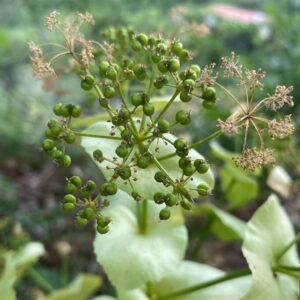
Σμύρνιο το έμφυτο
Etymology of Smyrnium connatum
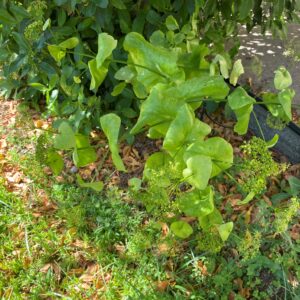
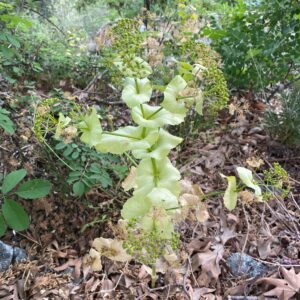
The genus name "Smyrnium" etymology derives from Ancient Greek "σμύρνα" [smýrna], meaning "myrrh". The epithet "connatum" comes from Latin and means "born together", probably to describe the appearance-formation of its leaves that have no edge, the edges are connected, born together.
The Smyrnium genus in Cyprus
Three Smyrnium species exist in the Cypriot habitat.
Botanical Identification
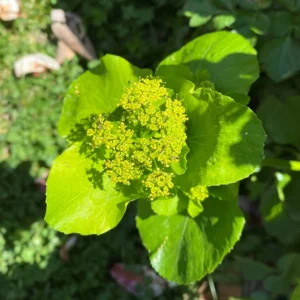
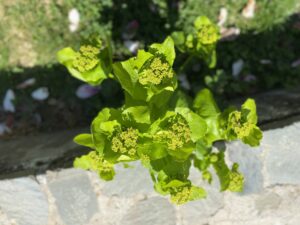
Smyrnium connatum is a biennial plant belonging to the Apiaceae family. It is best recognized by its perfoliate upper leaves, which completely encircle the stem, creating a distinct cup-like appearance. The plant typically produces vibrant yellow-green umbels during its primary flowering season in late spring.
Regional Habitat of Smyrnium connatus
This species is primarily native to the Eastern Mediterranean and Western Asia, including countries like Cyprus, Greece, and Turkey. It thrives in damp, shaded environments such as rocky gullies, woodlands, and stream banks. It is often found at moderate elevations where moisture is consistently available.
Smyrnium connatus in Cyprus
Smyrnium connatum is an uncommon plant, encountered only in the Kerynia district and the Troodos Mountains range (primarily in the Nicosia side). The plants in the photos were found in Pedoulas and Kykkos (Nicosia district). Smyrnium connatum appears at an altitude between 375–1725 metres. Its flowering period is brief, between April and May.
Culinary and Traditional Use
Historically, members of the Smyrnium genus, including S. connatum, were utilized as potherbs or salad greens. The stems and leaves possess a flavor profile similar to celery or parsley but with a more pungent, bitter edge. However, it is less commonly cultivated today than its relative, Alexanders.
Ecological Importance
As a nectar-rich flowering plant, it plays a vital role in supporting local biodiversity. The broad umbels provide an accessible platform for various pollinators, including hoverflies, bees, and small beetles. Its presence in Mediterranean ecosystems helps maintain the health of insect populations during the transitional spring months.