Date Created: 26.04.2022
Last Modified: 08.05.2026
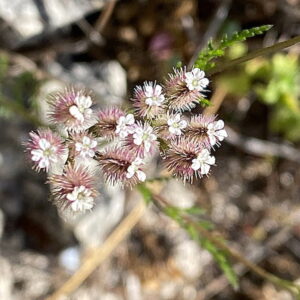
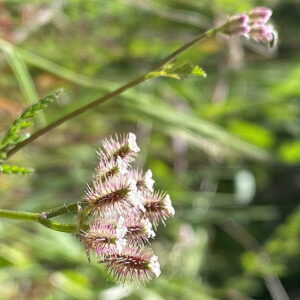
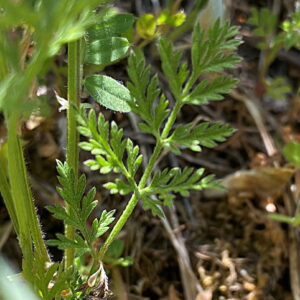
Torilis leptophylla (L.) Rchb., known as the Bristly Hedge Parsley, is a slender annual herb from the Apiaceae family. It is commonly found in dry, rocky habitats across Cyprus. The plant is easily identified by its fine foliage and distinctive hooked fruits that facilitate seed dispersal by clinging to passing animals or clothing.
Common Cypriot Names
The formal translation in Modern Greek is Τόριλις η λεπτόφυλλος [Torilis-i-leptofyllos]. In Cyprus, it is widely known as Αγριομαϊντανός [Agriomaintanos], meaning "wild parsley," due to its leaf structure. Locally, according to records from the Department of Forests, it is also called Κοτσινοσιάερα [Kotsinoshiaera], referring to the reddish stems often seen as the plant matures.
Common English Names
- Bristly Hedge Parsley
- Fine-leaved Hedge-parsley
- Slender-leaved Hedge-parsley
Etymology of Torilis leptophylla
The etymology of the genus name "Torilis" is considered obscure; it was coined by Michel Adanson in 1763 and may relate to the Latin "toreuma," meaning "embossed work," describing the fruit texture. "Leptophylla" derives from the Ancient Greek "λεπτός" [leptos], meaning "thin," and "φύλλον" [phyllon], meaning "leaf," hence "fine-leaved," referring to the deeply divided, narrow leaf segments of the plant.
Synonyms
- Anthriscus leptophyllus (L.) Koso-Pol. in Bull. Soc. Imp. Naturalistes Moscou, n.s., 29: 151 (1915 publ. 1916)
- Caucalis daucoides subsp. leptophylla (L.) Bonnier & Layens in Tabl. Syn. Pl. Vasc. France: 124 (1894), nom. illeg. homonym. post.
- Caucalis leptophylla L. in Sp. Pl.: 242 (1753)
- Daucalis leptophylla (L.) Pomel in Nouv. Mat. Fl. Atl. 1: 149 (1874)
- Daucus leptophyllus (L.) Scop. in Fl. Carniol., ed. 2, 1: 190 (1771)
- Pullipes leptophylla (L.) Raf. in Good Book: 54 (1840)
Key Characteristics for Diagnostic Identification
According to the definitive botanical keys established by Robert Desmond Meikle in his comprehensive Flora of Cyprus (Volume 1, 1977), this species is distinguished from other taxa of the genus in Cyprus by the below morphological features:
- Leaf Segments: The ultimate leaf segments are linear-subulate, measuring 2–5 mm in length and only 0.5–1 mm in width. This is the critical diagnostic for T. leptophylla; it separates it from T. arvensis and T. nodosa, which have segments often exceeding 5 mm in width and an ovate shape. While T. tenella has narrow segments, they are typically longer (up to 10 mm) and even more hair-like than those of T. leptophylla.
- Umbel Rays: The umbel is characterized by having only 2 or 3 rays, each 5–15 mm long. This feature immediately distinguishes it from T. arvensis, which has 3 to 12 rays usually 10–30 mm long, and T. tenella, which consistently has 4 to 9 rays. In T. nodosa, the rays are reduced to less than 2 mm, making the umbels appear sessile.
- Peduncles: The peduncles are 2–5 cm long and are consistently longer than the rays. This contrasts with T. nodosa, where the peduncle is virtually absent (0–5 mm), causing the flower heads to sit directly against the stem nodes.
- Fruit Spines: The spines on the fruit are 1–2 mm long and arranged in 2 or 3 neat, longitudinal rows. This distinguishes it from T. arvensis, where the spines are irregularly scattered, and T. tenella, which typically features only a single orderly row of spines per secondary ridge.
- Bracts (Involucre): The involucre is absent or reduced to a single tiny bract less than 2 mm long. This differentiates it from T. arvensis subsp. rectangula, which displays several persistent, linear-lanceolate bracts 5–10 mm long.
- Fruit Size: The mericarps are linear-oblong, 4.5–6 mm long and 1–1.5 mm broad. This is larger than T. arvensis (usually 3–4 mm long) and more elongated than T. nodosa, which has subglobose fruits about 2.5–3 mm in diameter.
Additional Identification Characteristics
Other botanists, such as those contributing to the Flora Europaea, emphasize the subulate (awl-shaped) nature of the spines. Unlike the glochidiate (hooked) spines of T. japonica (not native to Cyprus), the spines of this species are straight or only slightly curved at the very tip, giving the fruit a more rigid, "needle-like" appearance under magnification.
Botanical Structure and Floral Details of Torilis leptophylla
Floral Composition
The flowers are hermaphrodite and actinomorphic, featuring five white or pale pink petals. The petals are relatively uniform in size, lacking the strongly radiant (enlarged) outer petals seen in many other Apiaceae species, which gives the small umbels a very compact and symmetrical appearance during the flowering stage.
Geographical Distribution and Habitat of Torilis leptophylla
This species is native to the Mediterranean basin, stretching from Southern Europe and North Africa into Western Asia. It thrives in open, disturbed ground, including roadsides, fallow fields, and dry, stony pastures where it can complete its life cycle before the peak summer drought.
Distribution in Cyprus
In Cyprus, it is widely distributed across the island. It has been documented in the Troodos forest, the Akamas peninsula, the Kyrenia range, and throughout the Mesaoria plain. It is particularly abundant in the lower phrygana formations and on the edges of cultivated fields in the Paphos and Limassol districts.
Elevation Range in Cyprus
This taxon is found from sea level up to approximately 1,200 meters. While it is more frequent in the lowlands and foothills, it can reach higher altitudes in the open pine forests of the Troodos range where the soil is sufficiently skeletal.
Flowering Period in Cyprus
The flowering period typically begins in March and lasts through May. By early June, the plant usually dries up, leaving behind the characteristic brown, bristly fruits that remain attached to the dry stems for several weeks until they are dispersed.
Conservation Status in Cyprus
The species is currently classified as Least Concern (LC). It is not listed as threatened in the Red Data Book of the Flora of Cyprus, as its populations are stable and it adapts well to human-modified landscapes and grazing pressure.
Is Torilis leptophylla Suitable for Gardens?
It is generally not recommended for gardens. The seeds are rarely available commercially because it is considered a weed. Furthermore, the hooked fruits are a nuisance, as they cling aggressively to clothes and pet fur. There are no specific legal restrictions on its cultivation, but it lacks ornamental value compared to other Mediterranean annuals.
Toxicity and Safety
There is no specific evidence of high toxicity for this species in humans. However, like many members of the Apiaceae family, it contains furocoumarins, which can cause phytophotodermatitis (skin irritation when exposed to sunlight) in sensitive individuals. According to a study by Kivçak et al. (2004) on related Torilis species, the plant is generally avoided by livestock due to its rough texture rather than chemical toxicity.
Medicinal Properties
Traditional Uses in the Mediterranean
Historically, various species of Torilis have been used in folk medicine as diuretics or to treat digestive issues. However, specific peer-reviewed data for this taxon is limited. Most traditional knowledge regarding "Hedge Parsley" refers to T. japonica or T. arvensis, with this species being lumped together with them in ethnobotanical surveys.
Antimicrobial Potential
Research published in the Journal of Ethnopharmacology regarding Mediterranean Apiaceae suggests that the essential oils found in the seeds of Torilis species possess mild antimicrobial and antifungal properties. These compounds, primarily sesquiterpenes, are part of the plant's defense mechanism against soil-borne pathogens, though they are not currently used in modern clinical medicine.
Fascinating Insights About Torilis leptophylla
Epizoochory Specialists
The Bristly Hedge Parsley is a master of "hitchhiking" dispersal. The spines on its fruit are biologically engineered to interlock with the microscopic scales of animal hair. Studies on seed dispersal syndromes show that this species can travel several kilometers away from the parent plant by attaching to grazing sheep or goats.
Survival in Arid Microclimates
The "fine-leaved" nature of the plant is an evolutionary adaptation to reduce water loss. By having highly dissected leaves, the plant minimizes the surface area exposed to the harsh Cypriot sun while maximizing its ability to capture CO2. This allows it to thrive in the baking heat of the Mesaoria plain where broader-leaved plants would wilt.
A Sentinel of Overgrazing
In ecological surveys, the presence of high densities of Torilis species often indicates heavy grazing pressure. Because the prickly fruits and rough stems are unpalatable to most livestock, these plants are often left untouched while more succulent species are eaten, allowing them to dominate degraded pasturelands.