Date Created: 01.09.2022
Last Modified: 04.05.2026
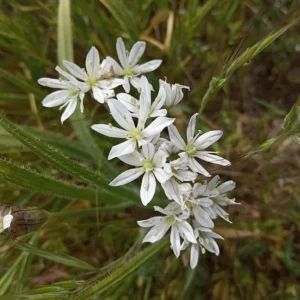
Allium trifoliatum, commonly known as Three-leaved Garlic, is a perennial bulbous plant native to the Mediterranean region. It is characterized by its hairy leaves and attractive clusters of white to pinkish flowers. This species is a frequent inhabitant of the Cypriot countryside, typically appearing in the early spring months in rocky or grassy habitats.
Common Cypriot Names
The formal translation of the Latin name in Modern Greek is Άλλιον το τριφυλλόφυλλο [Allion-to-trifillofillo]. In Cyprus, local populations refer to it as Αγριοσκορδούιν [Agrioskordouin] or Σκορδολούλουδον [Skordolouloudon] because of its characteristic garlic odor. These names are documented in local ethnographic botanical surveys, reflecting the plant's traditional recognition by villagers who identify wild flora by scent and utility.
Common English Names
- Three-leaved Garlic
- Hirsute Garlic
- Pink Garlic
Etymology of Allium trifoliatum
The etymology of the genus name "Allium" derives from the Latin "alium," which was the classical name for garlic used by the Romans. The specific epithet "trifoliatum" derives from the Latin "tres" [tria], meaning "three" and "folium" [fillo], which means "leaf", hence "three-leafed", referring to the three leaves that typically comprise the foliage of this species.
Key Characteristics for Diagnostic Identification
According to the definitive botanical keys established by Robert Desmond Meikle in his comprehensive Flora of Cyprus (Volume 2, 1985), this species is distinguished from other taxa of the genus in Cyprus by the below morphological features:
- Leaves: The leaves are distinctly hirsute or ciliate on the margins and often on the surfaces. This feature is a major diagnostic that separates it from A. neapolitanum and A. nigrum, which are entirely glabrous.
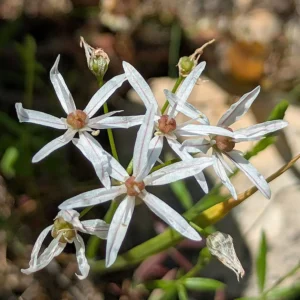
- Perianth Color: The flowers are white or pale pink, usually with a prominent pink or purplish mid-vein on each segment. This distinguishes it from A. subhirsutum, which almost always possesses pure white perianth segments without the colored vein.
- Filaments: The staminal filaments are simple and subulate, tapering from the base. This separates Allium trifoliatum from members of the A. ampeloprasum or A. curtum groups, which have tricuspidate filaments.
- Spathe: The spathe is persistent and much shorter than the flowering pedicels. This differentiates it from A. paniculatum, which features spathe valves with very long, leaf-like appendages that exceed the umbel.
- Plant Height: It is generally a smaller plant (10–30 cm) compared to the much taller A. orientale or A. nigrum, which often exceed 50 cm.
Additional Identification Characteristics
Botanists such as Tzanoudakis (1983) have noted that Allium trifoliatum is often diploid (2n=14), whereas some related Mediterranean taxa show polyploidy. Furthermore, the bulbs often produce several stalked bulbils at the base, a reproductive strategy that helps it colonize rocky crevices more effectively than the purely seed-reliant A. subhirsutum.
Botanical Structure and Floral Details of T. trifoliatum
Bulb Morphology
The bulb is subglobose, measuring roughly 1–1.5 cm in diameter. It is enclosed in membranous outer tunics that are typically brown or greyish, protecting the plant during the dormant summer heat.
Geographical Distribution and Habitat of Allium trifoliatum
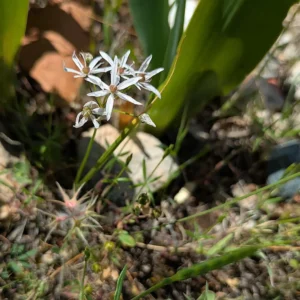
This species is widely distributed across the Mediterranean basin, from the Iberian Peninsula to the Levant and North Africa. It thrives in open Mediterranean woodlands, phrygana, garigue, and even the margins of cultivated fields where the soil is calcareous and well-drained.
Distribution in Cyprus
In Cyprus, it is widely recorded across most phytogeographical regions, including the Akamas Peninsula, the Troodos foothills, and the Pentadaktylos range. It is particularly common in the Paphos and Limassol districts, appearing frequently in undisturbed olive groves and limestone outcrops.
Elevation Range in Cyprus
The species is found from sea level up to an altitude of approximately 850 metres. It rarely penetrates the higher, cooler igneous peaks of the central Troodos massif, preferring the warmer thermochitonal zones of the island.
Flowering Period in Cyprus
The flowering period usually begins in late February and extends through April. Peak blooming typically occurs in March, synchronized with the peak of the Mediterranean spring before the onset of the summer drought.
Conservation Status in Cyprus
According to the Red Data Book of the Flora of Cyprus, Allium trifoliatum is categorized as Least Concern (LC). It is currently widespread and stable, though localized populations may be affected by intensive agricultural expansion or urban development in coastal areas.
Is Allium trifoliatum Suitable for Gardens?
This plant is excellent for Mediterranean rock gardens due to its drought tolerance. However, seeds and bulbs of Three-leaved Garlic are rarely available in the general international market and are mostly found through specialist native seed societies. International regulations like CITES do not list it, but local Cypriot law prohibits the collection of bulbs from the wild.
Toxicity and Safety
Like many members of the onion family, Allium trifoliatum contains organosulfur compounds. While human consumption in small amounts is generally safe, these compounds are highly toxic to dogs and cats. Research by the ASPCA and studies in the Journal of Veterinary Diagnostic Investigation confirm that ingestion can cause oxidative damage to red blood cells, leading to hemolytic anemia in domestic pets.
Medicinal Properties
Antimicrobial Effects
Studies on Mediterranean Allium species, including research published in Molecules (2021) by academic researchers like Dr. G. Zengin, suggest that the extracts possess antimicrobial and antioxidant properties. These are largely attributed to sulfur-containing volatiles like allicin, which inhibit the growth of various bacterial strains.
Traditional Ethnomedicine
Historically, wild garlics have been used in Mediterranean folk medicine to treat hypertension and digestive issues. However, most experts, including those from the European Medicines Agency (EMA), emphasize that while the genus has potential, specific clinical trials for this species are limited, and it should not replace conventional treatments.
Fascinating Insights About "Allium trifoliatum"
A Pollinator Generalist
Observations in Mediterranean ecology studies indicate that Three-leaved Garlic is a vital early-season resource for solitary bees and hoverflies. Because it flowers when few other species are in bloom, it plays a disproportionately large role in supporting local insect biodiversity during the transition from winter to spring.
The Scent Paradox
While the plant produces a strong garlic odor to deter herbivores like goats and rabbits, the flowers themselves emit a faintly sweet fragrance to attract pollinators. This dual-chemical strategy allows the plant to protect its foliage while ensuring successful cross-pollination of its seeds.
Survival via "Droppers"
This species utilizes a unique growth habit where the new bulbs are formed at the end of long underground stolons, often called "droppers." This allows the plant to effectively "move" underground to find better soil pockets or moisture sources, ensuring its survival in the rugged, rocky terrain of Cyprus.