Drimia aphylla is a fascinating, late-blooming geophyte belonging to the Asparagaceae family. This resilient bulbous plant is characterized by its unusual life cycle, where flowers appear long after the leaves have withered away. It is a master of survival in the arid, rocky terrains of the Eastern Mediterranean.
Cyrpiot names
Αβρόσσιυλλα, Δρίμια η άφυλλη
Common English Names
Drimia aphylla is most commonly known as the Leafless Squill, a direct reference to its unique habit of flowering without leaves. In some regions, it is colloquially called the Autumn Squill, though this name is also applied to other species in the Prospero genus.
Synonyms and Taxonomic History
Taxonomic revisions have seen Drimia aphylla moved between several genera over the decades. A major synonym frequently found in older botanical texts is Urginea aphylla. Additionally, some records may list it under Charybdis aphylla, reflecting the complex classification history of the squill group.
Etymology of Drimia aphylla
The etymology of the genus "Drimia" derives from Ancient Greek "δριμύς" [drimis], which means "unpleasantly bitter/pungent". "Aphylla", also in Ancient Greek means "leafless" because this species's flowers appear before the leaves are unearthed.
Botanical Features and Growth Habit
Seasonal Leaf Production
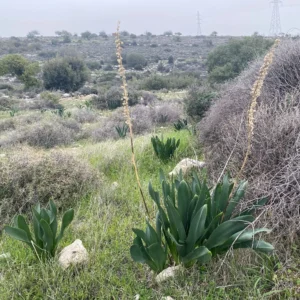
In winter, Drimia aphylla produces a rosette of narrow, blue-green leaves that capture energy from the seasonal rains. However, by late spring, these leaves turn yellow and completely disappear. This strategy allows Drimia aphylla to avoid the moisture loss associated with high summer temperatures.
The Leafless Flowering Stalk
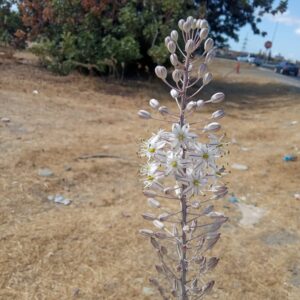
The most striking feature of Drimia aphylla is its flowering stem, which emerges from the bare ground in late summer or autumn. This tall, slender scape can reach heights of 40 to 80 centimeters. Because it blooms without foliage, Drimia aphylla presents a stark, minimalist silhouette against the parched landscape.
Habitat and Ecological Niche
Preference for Arid Terrain
Drimia aphylla is typically found in dry, open habitats such as "phrygana" (scrubland), rocky hillsides, and abandoned fields. It thrives in full sun and is perfectly adapted to poor, stony soils. This makes Drimia aphylla a common sight in areas where other vegetation struggles to survive the drought.
Deep-Seated Bulb Resilience
The secret to the survival of Drimia aphylla lies in its large, subterranean bulb. This organ stores water and nutrients with incredible efficiency. These deep-seated bulbs protect Drimia aphylla from the intense heat of the Mediterranean sun and even from the occasional localized brush fire.
Geographical Distribution
The range of Drimia aphylla is primarily concentrated in the Eastern Mediterranean, including Greece, Turkey, and the Levant. It is a characteristic species of the Aegean islands. Drimia aphylla is frequently observed in coastal and inland regions that experience a strictly Mediterranean climate.
Presence Across Cyprus
In Cyprus, Drimia aphylla is widespread, appearing in both the lowlands and the foothills. It is often seen along the edges of traditional carob and olive groves. Residents frequently notice the tall white spikes of Drimia aphylla appearing in August and September, signaling the approaching end of summer.
Toxicity and Chemical Defense
Presence of Cardiac Glycosides
Like its famous relative, the Sea Squill, Drimia aphylla contains potent cardiac glycosides. These chemicals are highly toxic to mammals and serve as a defense against grazing animals. Ingesting any part of Drimia aphylla can lead to serious heart rhythm disturbances or gastrointestinal failure.
Skin Irritation and Sap
The sap of Drimia aphylla contains calcium oxalate crystals, which can cause intense itching or burning upon contact with human skin. Historically, handled with extreme care, the bulbs of Drimia aphylla were known to cause "squill dermatitis." It is a plant best observed without physical contact.
Medicinal and Practical Uses
Historical Pharmacopeia
In ancient times, plants related to Drimia aphylla were used in minute doses as diuretics or heart stimulants. However, due to the high risk of overdose, Drimia aphylla is no longer used in modern medicine. Its extracts were also historically used as a primitive rodenticide in agricultural settings.
Modern Research Potential
Scientists continue to study the chemical compounds within Drimia aphylla for potential pharmacological applications. The unique alkaloids found in the bulb of Drimia aphylla are being researched for their anti-fungal and anti-cancer properties, though these studies remain in the laboratory phase.
Drimia aphylla in Cyprus
Drimia is a common plant found all around Cyprus up to an altitude of 1350 metres. It blooms from July until October, hence it is a drought-tolerant plant. It grows on dry hills, sandy ground, seaside areas and rocky calcareous cliffs.