Narcissus tazetta is a legendary bulbous perennial that serves as a cornerstone of the Mediterranean floral identity. Belonging to the Amaryllidaceae family, it is renowned for its intoxicating fragrance and clusters of white and gold blossoms. In Cyprus, it is a winter icon, heralding the arrival of the cooler, rain-fed growing season.
Cypriot names
Ματσικόριδο, Μιτσικόριδο, Άγριος Νάρκισσος, Νάρκισσος ο ταζέττιος
Common English Names
In English, this species is most frequently called the Bunch-Flowered Daffodil or the French Daffodil. In some regions, it is known as the Polyanthus Narcissus due to its multi-flowered stems. These names highlight the plant's prolific blooming habit, distinguishing it from the single-flowered trumpet daffodils common in Northern Europe.
Etymology of Narcissus tazetta
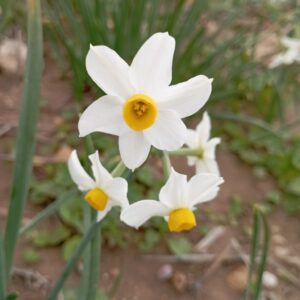
The genus was named after "Νάρκισσος" [Narkissos, Narcissus in Latin], who in Greek mythology, was distinguished for his beauty. Narcissus is considered one "who prides himself, especially on his outward appearance or his beauty". Hence the ancient Greeks considered the plant beautiful as such. The flower gets its epithet, "tazetta" (small shallow wine cup), from the Italian word "tazza", meaning "shallow wine cup", which is a reference to the bowl-shaped orange corona of the flower’s center.
Taxonomy and Scientific Classification
Taxonomically, Narcissus tazetta is considered one of the most primitive and widespread species within its genus. It is the type species for the Tazettae section, characterized by having multiple flowers per umbel. Its genetic stability across the Mediterranean has made it a parent for countless modern horticultural hybrids and cultivars.
Botanical Structure and Growth Habit
Narcissus tazetta grows from a large, perennial bulb protected by brown, papery tunics. It typically reaches a height of 30 to 50 centimeters, producing a hollow, flattened flower scape. How to recognize its growth? The plant emerges in late autumn, utilizing stored energy to produce lush greenery before most other wildflowers wake up.
Foliage and Leaf Arrangement
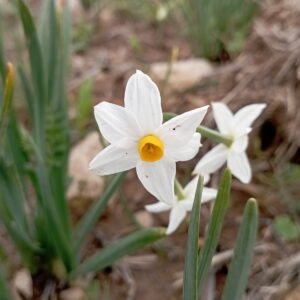
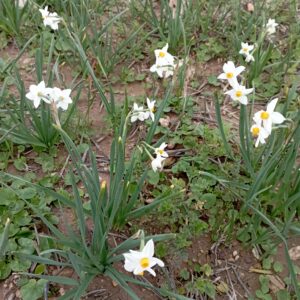
The leaves of Narcissus tazetta are strap-shaped, glaucous (blue-green), and quite fleshy. They usually grow in groups of four to six per bulb, standing upright or slightly arching. These leaves are designed to shed heavy winter rain efficiently, ensuring the crown of the bulb remains aerated and free from fungal rot.
Floral Identification and Color
The inflorescence is an umbel bearing between 3 and 15 flowers. Each bloom features pure white spreading petals (tepals) surrounding a shallow, bright yellow or orange cup-like corona. This classic "egg-in-the-pan" appearance is accompanied by a scent so powerful it can perfume an entire room from a single stem.
Habitat and Ecological Preferences
In Cyprus, Narcissus tazetta thrives in seasonally wet meadows, rocky hillsides, and the edges of cultivated fields. It prefers heavy, clay-rich soils that retain moisture during the winter months. How to find its habitat? Look for "vlycha" or damp depressions where water collects after the first major October and November storms.
Endemism and Geographic Range
While not endemic to Cyprus, the island hosts some of the most robust wild populations in the Eastern Mediterranean. Its broader range extends from Southern Europe and North Africa all the way to China. In Cyprus, it is widely distributed, from the coastal plains of Akrotiri to the lower slopes of the Troodos.
Reproductive Strategy and Seed Set
Narcissus tazetta reproduces both through seed production and by forming "offsets" or daughter bulbs. The flowers are typically pollinated by hawkmoths and early-emerging bees attracted to the intense nighttime fragrance. Once the flowers fade, the plant produces green capsules containing black, rounded seeds that drop into the damp winter soil.
Adaptation to Seasonal Drought
By late March or April, as the Cypriot sun begins to intensify, the foliage of Narcissus tazetta yellows and dies back. The plant enters a deep dormancy, surviving the bone-dry summer as an underground bulb. This "estivation" is a critical survival mechanism, allowing it to remain completely unaffected by the extreme heat and drought.
Toxicity and Chemical Defenses
Every part of Narcissus tazetta is highly toxic if ingested, containing alkaloids like lycorine. These toxins provide an effective shield against grazing goats, sheep, and even rodents. A fascinating fact is that the sap contains calcium oxalate crystals, which can cause skin irritation, often known by florists as "lily rash."
Human Interaction and Folklore
In Cyprus, the Narcissus tazetta is deeply embedded in local culture and is frequently mentioned in traditional folk songs. It was historically gathered in large bunches to decorate homes during winter festivals. Because of its beauty and scent, it remains one of the most recognized and beloved wild plants among the Cypriot people.
Cultivation and Gardening Tips
How to grow this in your garden? Plant the bulbs in autumn in a sunny spot with good drainage. They are incredibly low-maintenance and will "naturalize," meaning they will spread and return year after year. Avoid cutting the leaves back until they have completely turned brown, as they provide energy for next year's bloom.
Relationship with Pollinators
The long floral tube of Narcissus tazetta suggests a specialized relationship with long-tongued insects. Hawkmoths are particularly important, as they can hover while feeding on the nectar. This nocturnal pollination ensures that the plant can set seed even during the cooler, shorter days of the Mediterranean winter.
Scientific Significance and Research
Scientists study Narcissus tazetta for its diverse phytochemical properties, particularly in the field of Alzheimer's research. Some alkaloids found in the genus are used to produce galantamine, a drug that helps manage cognitive decline. This wild flower may hold the key to significant future medical breakthroughs.
Fascinating Floral Sensitivity
A fascinating fact is that Narcissus tazetta flowers are remarkably hardy despite their delicate appearance. They can survive light frosts and heavy rain without losing their scent or petals. This resilience makes them one of the few reliable nectar sources for insects that might wake up during a warm winter spell.
Narcissus tazetta in Cyprus
Despite the fact that Narcissus tazetta exists in all the regions of Cyprus except for the Troodos region, it is in fact a rare plant to encounter. It is locally common in the village of Pano Arodes (Paphos) in the "Matsikorithkia" area, where it is found in abundance. Narcissus tazetta is protected by law and it can not be cut or removed from the ground.
Growth Habits and Flowering Period in Cyprus
It grows at an altitude of up to 750 metres in meadows, cultivated fields and limestone crevices. Narcissus tazetta can reach up to 40 centimetres tall but it usually reaches 20-30 centimetres in height. Narcissus tazetta blooms at least during November and March.