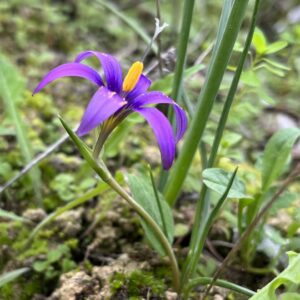
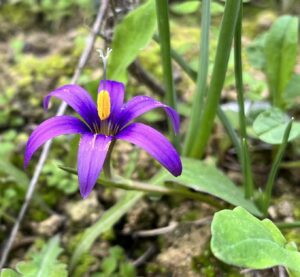
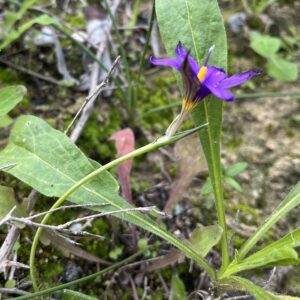
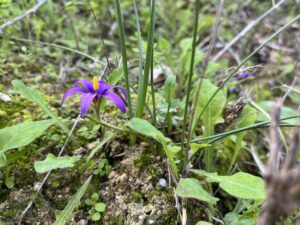
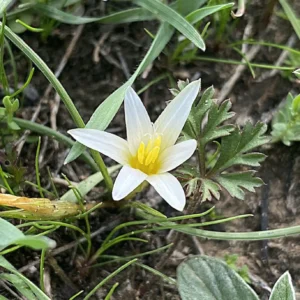
Romulea tempskyana is a rare and striking bulbous perennial belonging to the Iridaceae family. This diminutive gem is primarily found in the Eastern Mediterranean, with its most significant presence concentrated on the island of Cyprus. It is renowned for its deep, violet-purple blooms that emerge close to the earth in January.
Cypriot names
Βοσκός [Voskos], Ρωμουλέα τεμπσκυάνα
From where the name "voskos" originates?
In Cyprus, Romulea tempskyana is colloquially known as "Voskos" (Greek: Βοσκός), a term that translates directly to "shepherd." This fascinating name is rooted in the island’s pastoral history and the simple, practical observations of those who lived closest to the land.
The Meaning and Origin of "Voskos"
The name stems from the Greek word βοσκός, meaning shepherd or herdsman. Historically, shepherds in the Cypriot countryside were the primary observers of the island's floral cycles. They noticed that this tiny flower would blanket the rocky pastures exactly during the peak of the lambing and grazing season in early spring.
The Edibility Factor
A major reason for the name is that the small, underground corms (bulbs) of Romulea tempskyana are edible and have a slightly sweet, nut-like flavor. Shepherds - and especially shepherd boys - would dig them up and eat them raw while out in the fields tending to their flocks. How to find them? You simply follow the thin, grass-like leaves to the base and dig just an inch or two into the soil.
Identification in the Field
Beyond its flavor, the plant’s habit of growing in short, grazed grass makes it highly visible to anyone walking with livestock. In the village traditions of Cyprus, the appearance of the "Voskos" was a sign that the winter’s harshest weather had passed and that the "shepherd’s season" of lush, green growth had truly begun.
Etymology of Romulea tempskyana
The etymology of the genus Romulea is dedicated to Romulus, the legendary founder and first king of Rome, reflecting the genus's strong presence in Italy. The species epithet tempskyana honors the 19th-century plant collector Friedrich von Tempsky.
Common English Names
In English-speaking botanical circles, Romulea tempskyana is most frequently referred to as the Dark-Flowered Romulea. Occasionally, enthusiasts call it the Cypriot Sand Crocus, though it is not a true crocus. These names highlight the plant's most visible feature—its intense, saturated floral color—and its preferred gritty, well-drained habitat.
Taxonomy and Scientific Classification
Taxonomically, Romulea tempskyana sits within the tribe Irideae, making it a close relative of irises and crocuses. It is distinguished from its relatives by its specialized leaf structure and the way its floral tube is formed. Botanists once debated its placement, but genetic testing has confirmed its distinct status within the Mediterranean Romulea complex.
Botanical Structure and Growth Habit
Romulea tempskyana grows from a small, underground corm that is covered in a brown, papery tunic. It is a very low-growing plant, rarely exceeding 5 to 10 centimeters in height. This "prostrate" habit is a clever evolutionary design, allowing Romulea tempskyana to remain below the buffeting winds that sweep across the Cypriot mesas.
Fleshy and Thread-Like Foliage
The leaves of Romulea tempskyana are remarkably thin and grass-like, often appearing almost cylindrical or thread-like in cross-section. These leaves usually emerge before the flowers and can be significantly longer than the flower stalk itself. How to identify them? Look for the narrow white stripe running down the center of each leaf.
Intense Violet Floral Display
The flowers of Romulea tempskyana are a deep, velvety violet or dark purple, often with a yellow or orange "throat" at the center. Each blossom has six tepals that open wide in bright sunlight but close tightly during overcast weather or at night. This light-sensitive behavior protects the delicate reproductive organs from moisture.
Habitat and Ecological Preferences
Romulea tempskyana is a specialist of "garigue" and "phrygana" ecosystems, often found on rocky, calcareous hillsides. It thrives in open pine forests and grassy clearings where competition from taller plants is minimal. Romulea tempskyana has a particular affinity for the red, iron-rich "terrarossa" soils that characterize much of the Cypriot landscape.
Endemism and Geographic Range
While it is found in limited parts of Turkey and the Aegean, Romulea tempskyana reaches its highest density in Cyprus. It is considered a near-endemic species, making the island a critical stronghold for its global population. Seeing a colony of Romulea tempskyana in full bloom is a signature experience for hikers in the Akamas or Troodos foothills.
Early Winter Phenology
Timing is everything for Romulea tempskyana, which typically flowers between January and February. This early appearance allows it to utilize the residual moisture from winter rains before the scorching Mediterranean sun arrives. How to spot them? You must look closely at the ground, as they often hide among short grasses and mosses.
Reproductive Strategy and Seed Set
After the flowering period ends, Romulea tempskyana produces small, round seed capsules that sit at the soil surface. As the stalk withers, it often coils or bends, a process known as "geocarpy," which helps push the seeds toward the soil. This ensures that the next generation of Romulea tempskyana stays within its preferred microhabitat.
Adaptation to Summer Drought
By late March, Romulea tempskyana completely disappears from the surface, with its foliage turning brown and disintegrating. The plant survives the extreme heat of the Cypriot summer as a dormant corm. This subterranean "sleep" is a vital adaptation that allows Romulea tempskyana to endure months without a single drop of rain.
Toxicity and Chemical Defenses
Like many members of the Iridaceae family, the corms of Romulea tempskyana contain compounds that can be irritating if ingested by mammals. These bitter chemicals act as a deterrent against burrowing rodents that might otherwise eat the nutrient-rich bulbs. Romulea tempskyana has evolved these defenses to ensure its survival in a competitive ecosystem.
Human Interaction and Conservation
Historically, Romulea tempskyana has been admired by local populations as a harbinger of winter. However, it is sensitive to over-trampling and habitat loss due to agricultural expansion. Protecting the "stony pastures" of Cyprus is essential to ensure that Romulea tempskyana continues to color the landscape every February.
Cultivation and Rock Gardening
For those wondering how to grow this beauty, Romulea tempskyana is a favorite for alpine house cultivation. It requires a very gritty, free-draining compost and a "summer bake"—a period where the soil is kept completely dry to mimic its natural dormancy. It is a rewarding plant for patient gardeners who appreciate miniature botanical wonders.
Relationship with Pollinators
The bright yellow centers of Romulea tempskyana act as a "bullseye" for early-season bees and hoverflies. These insects are essential for the cross-pollination of the species. Because Romulea tempskyana blooms when few other flowers are available, it provides a crucial, high-energy nectar source for insects emerging from their winter sleep.
Scientific Significance and Research
Botanists study Romulea tempskyana to better understand the floral migration patterns between Asia Minor and the Mediterranean islands. Its presence in Cyprus provides clues about the ancient land bridges that once connected these regions. Research into Romulea tempskyana helps clarify the evolutionary history of the entire Romulea genus.
Fascinating Floral Sensitivity
A fascinating fact about Romulea tempskyana is its "thermantic" movement; the flowers actually track the sun to keep their internal temperature high. This warmth speeds up the development of pollen and makes the flower more attractive to cold-blooded insects. It is a sophisticated piece of solar engineering contained within a tiny purple bloom.
Romulea tempskyana in Cyprus
Romulea tempskyana usually blooms in January and February but sometimes it could bloom from December or may bloom until March. It is a very common, extremely short plant encountered all around Cyprus except for the Akamas region. It mainly grows on uncultivated prairies, forests, and stony places, as cultivation kills it. It grows at altitudes of up to 1225 metres.
How to identify Romulea tempskyana
Romulea tempskyana's perianth is deep violet, rarely pure white, 2.1-3.7 cm long, and its tube is 8.5-17 mm long (significantly larger sizes than the other two subspecies). The other two subspecies in Cyprus (Romulea columnae and Romulea ramiflora) have a white to deep lilac-blue, or greenish-yellow flushed violet perianth with dark veins, 0.9-1.8 cm long, and a tube 2.5-4 mm long.