Scilla lochiae (Meikle) Speta, a rare and exquisite bulbous perennial in the Asparagaceae family, is known as Loch's Glory-of-the-Snow. Its most significant synonym is Chionodoxa lochiae Meikle. This high-altitude endemic is a botanical treasure of the island of Cyprus, appearing early in the year as the winter snow begins to recede from the mountain peaks.
Cypriot Names
Σκίλλα της Λόχης
Common English Names
Loch's Glory-of-the-Snow
Etymology of Scilla lochiae
The etymology of the genus name Scilla originates from the Greek word "σκίλλα" [skilla], which historically referred to various sea squills. The species name lochiae was assigned by Robert Desmond Meikle to honor Lady Loch, the wife of a British Governor of Cyprus, who is credited with the original discovery of this plant.
Synonyms
- Chionodoxa lochiae Meikle
- Chionodoxa luciliae auct. non Boiss.
Key Characteristics for Diagnostic Identification
According to the definitive botanical keys established by Robert Desmond Meikle (1923–2021) in his comprehensive Flora of Cyprus, this species is distinguished by several specific morphological features:
- Bulb: Small and ovoid, typically featuring a brown or slightly purplish protective tunic.
- Leaves: Generally 2 per bulb, linear and channelled, appearing at the same time as the flowers.
- Inflorescence: A lax raceme that bears between 2 and 4 star-shaped, nodding flowers.
- Perianth: The segments are a deep, uniform blue, lacking the large white eye seen in relatives.
- Stamens: Filaments are notably broadened and flattened, forming a tight, cone-like structure around the ovary.
- Altitude: This plant is strictly found in alpine conditions between 1100 and 1900 meters.
Botanical Structure and Floral Details of Scilla lochiae
Leaf and Stem Morphology
The leaves of Scilla lochiae are dark green and emerge directly from the bulb alongside the flower scape. They are relatively fleshy and channelled, designed to store moisture during the brief spring growth period. The stem is slender and often displays a purplish tint, providing an elegant support for the delicate flowers.
Floral Mechanics and Perianth
The flowers of Scilla lochiae exhibit a unique structural trait where the filaments are packed closely together. This creates a central cone that protects the reproductive organs from the harsh mountain elements. The deep blue tepals are fused at the base, forming a short perianth tube that is characteristic of the species.
Geographical Distribution and Habitat of Scilla lochiae
In a global context, Scilla lochiae is an extremely narrow endemic, meaning it is found naturally only on the island of Cyprus. It does not exist in the wild in any other country. This makes the island's populations globally significant, representing the entire genetic heritage and survival potential of the species.
Distribution in Cyprus
In Cyprus, this species is restricted to the highest peaks of the Troodos mountain range, specifically around Mount Olympus, Amiantos, Prodromos, Pedoulas, and Kakopetria. It thrives in shaded, moist locations under Cedrus brevifolia or Pinus nigra forests. The flowering period is very specific, occurring between March and April as the snow melts.
Is Scilla lochiae Suitable for Gardens?
When considering "Is Scilla lochiae Suitable for Gardens?", the answer is that it is highly unsuitable for lowland Mediterranean gardens. The plant requires the freezing temperatures and snow cover of the high mountains to complete its life cycle. Additionally, it is strictly protected by law, making its removal from the wild illegal.
Conservation Status and Toxicity
Conservation Status
Scilla lochiae is currently classified as Endangered in the Red Data Book of the Flora of Cyprus. Its main threats include habitat loss from ski resort development and the impacts of climate change, which reduce the snow cover it relies on. It is protected under the Bern Convention and national forestry regulations.
Toxicity of Scilla lochiae
Like many other members of the Asparagaceae family, Scilla lochiae contains chemical compounds known as cardiac glycosides. If ingested, these substances can be toxic to humans and animals, potentially causing heart irregularities and digestive distress. The plant should be admired in its natural habitat rather than handled or consumed by anyone.
Fascinating Facts About Scilla lochiae
A Discovery by Lady Loch
The history of Scilla lochiae is closely tied to Lady Loch, who discovered the plant while exploring the Troodos peaks. She sent specimens to the Royal Botanic Gardens, Kew, where Robert Desmond Meikle identified it as a new species. This story highlights the important role that dedicated amateur botanists have played in Cyprus.
Evolution and the Melting Snow
This plant is a specialized "chionophile," or snow-lover, having evolved to bloom the moment the ground is clear of snow. This strategy allows it to capture maximum sunlight before the forest canopy fully develops. It utilizes the surge of moisture from the melting snow to fuel its rapid growth and reproduction.
Taxonomic Reclassification
For several decades, this orchid relative was placed within the genus Chionodoxa. However, modern genetic research and morphological analysis led to its reclassification into the genus Scilla. This change reflects our evolving understanding of the unique evolutionary paths taken by plants that have been isolated on the mountains of Cyprus for millennia.
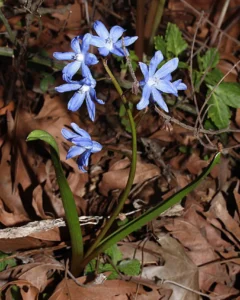
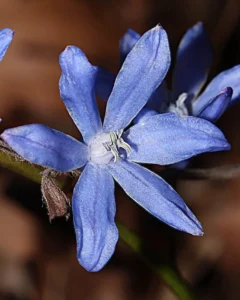
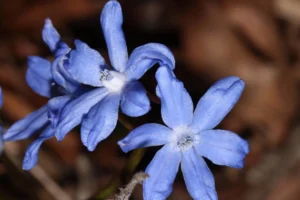
Image Credits: Christos Christofidis