Κάρθαμος ο βαφικός
Etymology of Carthamus tinctorius
The name Carthamus is believed to be derived from the Hebrew word "qartam," which means "to paint," referencing the deep orange-red dye (carthamin) that can be extracted from the flowers of certain species in this genus, like safflower. The specific epithet "tinctorius" is Latin for "used in dyeing" (from tingere, "to dye" or "to color"). Together, the name directly refers to the plant’s long history as a dye crop, valued since antiquity for producing vibrant textile colors.
Geographical distribution
Carthamus tinctorius, commonly known as safflower, is an annual crop species of ancient domestication, originally cultivated in the Near East, Southwest Asia, and adjacent regions of the Indian subcontinent. Today, it is grown widely across Mediterranean and semi-arid zones, including Turkey, Iran, Central Asia, North Africa, southern Europe, the Indian subcontinent, parts of China, Ethiopia, Australia, Mexico, and the United States, particularly California and the Great Plains. While it is primarily encountered as a cultivated oilseed and dye crop, it can occasionally escape from cultivation and appear along field margins and disturbed ground, though persistent self-sustaining wild populations are much less common than in related wild or weedy Carthamus species.
Habitat of Carthamus tinctorius
Climate
Safflower is well adapted to warm, dry environments and is notably drought-tolerant once established. It grows best in climates with a cool growing season followed by a warm, dry period for seed ripening.
Soil Preferences
The species prefers well-drained, moderately fertile loams or sandy loams but can tolerate calcareous soils and moderate salinity. It does not thrive in waterlogged or excessively humid conditions.
Seasonal Growth
In Mediterranean-type climates, it is often planted in late winter or early spring and harvested in early summer. Escaped plants are most often found on roadsides, fallow fields, and other disturbed areas close to former or current cultivation.
Physical characteristics
Growth Form
Spineless cultivars of Carthamus tinctorius, those without rigid marginal or involucral bract spines, are distinguished by their smoother, less armed appearance while retaining the general form of the species. The plant grows as an annual herb with a deep taproot, often penetrating more than one meter into loose soils. Stems are branched toward the top, and the plant may reach between 30 and 150 cm in height depending on variety and moisture availability.
Leaves
Leaves are alternate, with the lower ones broader and petiolate, and the upper leaves sessile to clasping. In spineless forms, the leaf margins may be slightly toothed but lack the stiff yellow spines characteristic of wild relatives.
Inflorescence and Flowers
The flower heads (capitula) are solitary or in small clusters at the ends of branches, measuring 2.5–5 cm across, and contain only tubular disc florets. These florets are typically yellow at first, often turning orange or red with age, and some cultivars bear cream-colored flowers.
Bracts and Fruits
The involucral bracts are overlapping, with entire, unarmed tips in spineless varieties. Fruits are smooth, four-angled achenes, white to gray in color, 6–8 mm long, and in cultivated forms generally lack a functional pappus, aiding in the plant’s containment to agricultural sites.
Carthamus tinctorius in Cyprus
Status and Cultivation
In Cyprus, within the territories administered by the Republic of Cyprus, Carthamus tinctorius has been historically cultivated and remains present on a small scale for oilseed production, birdseed, and occasionally as a cut flower or dye source.
More specifically, safflower cultivation was investigated from 1968 to 1984, with a focus on rainfed conditions. The Agricultural Research Institute in Cyprus, according to a study, introduced and screened various varieties, ultimately selecting "Kind (Rch)" as a high-oil variety with a decent yield.
Occurrence in the Wild
The volume of presence of Carthamus tinctorius in the wild is unknown, but it is most likely a rare or very rare phenomenon to encounter a Carthamus tinctorius plant growing in the wild.
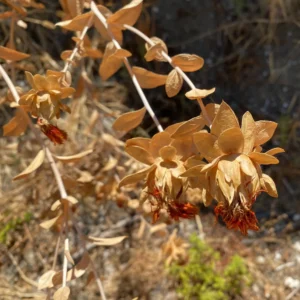
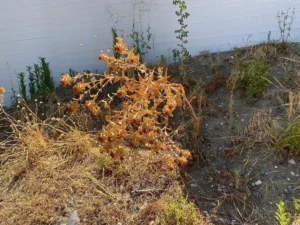
The specimen of the pictures was recorded in Trimiklini village (Lemesos district), July 2025, on disturbed ground. The approximate elevation of that specific area is around 600 meters.
Seasonality
In Cyprus, safflower was generally sown in late winter and flowers from April to June, with seed set and harvest from May to July, varying with rainfall and elevation.