Λακτούκη η πριονόφυλλη
Etymology of Lactuca serriola
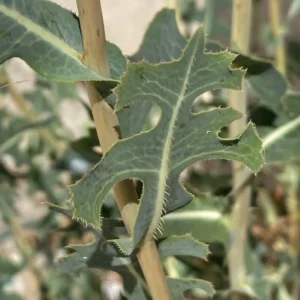
''Lactuca'' is derived from the Latin verb ''lacto'', meaning "contain milk", hence "lactuca" is a "milky plant", referring to the white, milky juice of the root and stems of the plant. The "Serriola" etymology is unknown and the closest Latin word, "serrata" means "toothed like a saw", which term actually matches the shape of its leaves.
Lactuca serriola in Cyprus
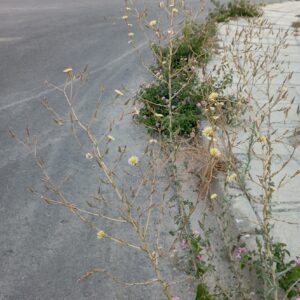
Lactuca serriola is by far the most common species of the genus in Cyprus. It is actually one of the most popular plants that grow in the Cyprus habitat and it grows at any altitude. It is a plant that is absent in the Akamas regions and the Karpasia peninsula. It primarily grows in gardens, sidewalks, roadsides, and fields. Its flowering period is from June until October.
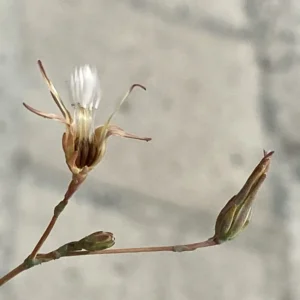
Lactuca serriola is typically an annual or biennial plant that can grow quite tall, often reaching up to 1.8 meters or more. One notable characteristic of this plant is its daily floral rhythm: its flower heads generally open in the early morning and tend to close by midday, especially as the sun becomes intense. Regarding animal consumption, Lactuca serriola contains a bitter, milky latex which includes compounds like lactucarium. While it's not generally considered highly toxic, this bitterness often makes it unpalatable to livestock, including chickens, which may avoid it, particularly if other forage is available.
Key morphological characteristics of Lactuca serriola
Leaves
Characterized by spiny-toothed margins and a distinctive row of spines on the underside of the midrib of the leaves. This is a primary distinguishing feature, earning it the common name "prickly lettuce."
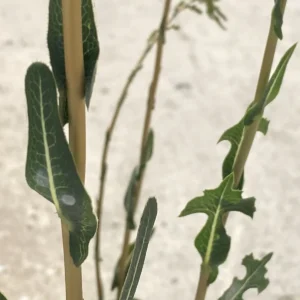
Leaf blades are typically lobed (runcinate-pinnatifid), though an unlobed form (forma integrifolia) also exists. The lobes are often irregular.
Growth Habit and Stem
An annual or biennial plant that can easily grow quite tall, up to 1.5-2 meters.
Stems are erect, often branched in the upper half, and are spiny at the base.