Ταραξάκο τομέας Ταραξάκο
The meaning of Taraxacum sect. Taraxacum
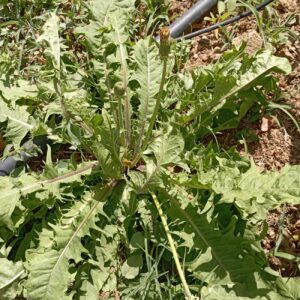
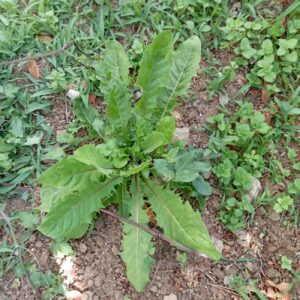
Taraxacum sect. Taraxacum means "Taraxacum section Taraxacum". It is not a name for a species. Taraxacum sect. Taraxacum is the taxonomic group that formally contains the common dandelion (T. officinale) and its closest relatives within the broader and highly complex Taraxacum genus. The genus is notoriously difficult taxonomically due to widespread apomixis and polyploidy, leading to hundreds or even thousands of described microspecies, which are grouped into various sections. Section Taraxacum is the foundational one among these sections. So far, the plant in the pictures below, could not be clarified which micro-species of the Taraxacum genus is.
Taraxacums in Cyprus
Four Taraxacum species are said to exist in the Cypriot habitat, plus the Taraxacum plant shown in the pictures below, for which this page is about.
About Taraxacum sect. Taraxacum of Cyprus
Scientific literature, particularly the "Supplementary notes to the flora of Cyprus VIII" published by R. Hand in 2015, provides evidence for the first time of the presence of Taraxacum sect. Ruderalia (a former attempt to classify this plant by R. Hand) in Cyprus. This publication addresses the identification of introduced dandelion species in Cyprus and specifically mentions Taraxacum sect. Ruderalia. Notably, plants found near the entrance of the "Panagia tou Kykkou" monastery, situated at approximately 1200 meters in altitude (1318 is the actual altitude), were classified as naturalised, non-invasive members of this section. These plants were observed growing on an irrigated lawn, indicating a habitat influenced by human activity. Despite their classification at the sectional level, the precise species identification of these particular plants remained unresolved, as they exhibited characteristics that suggested an influence from T. sect. Erythrosperma. This difficulty in assigning the specimens to a known species within Ruderalia underscores the taxonomic complexities often encountered within the Taraxacum genus.
Regarding habitat and environment, the documented finding of Taraxacum sect. Ruderalia at the Panagia tou Kykkou monastery on an irrigated lawn aligned with the general ecological preferences of this section for disturbed, often anthropogenic habitats with high nutrient levels. The possibility of introduction via grass seeds, as speculated in the literature, [or even imported soil or other plants], further supports the notion that the presence of this section in Cyprus might be linked to human activities. Furthermore, in the same garden, another exotic(?) variation of a pink and white Convolvulus arvensis was recorded by me in 2023. I speculate that it was also introduced in the same way the unidentified Taraxacum was introduced, as well: accidentally.
Characteristics of the Kykkos's Taraxacum
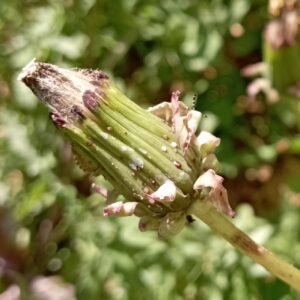
In Cyprus, only Taraxacum holmboei and this plant, have their outer phyllaries patent or reflexed, and only these two bloom in spring during April and May.
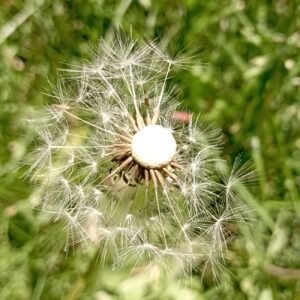
Taraxacum holmboei has achenes bright, rusty-red; the beak of the achene is 6-7 mm long, and its involucre is 8-10 mm long. Taraxacum sect. Taraxacum has achenes brownish; the beak of its achene is 7-15 mm long, and its involucre is 12-25 mm long.