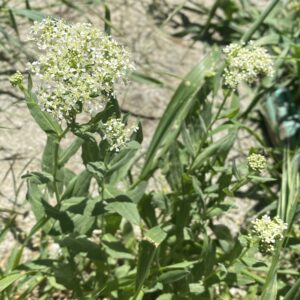
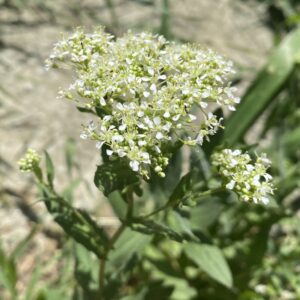
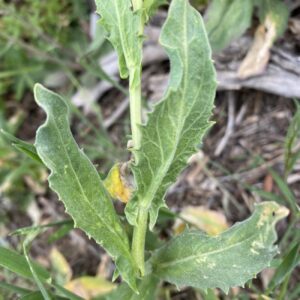
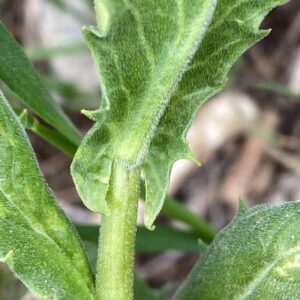
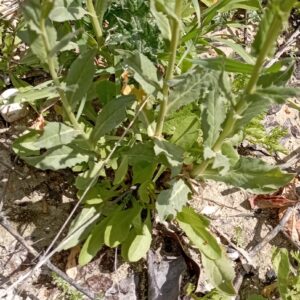
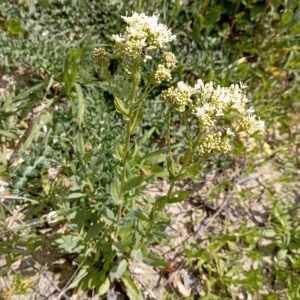
Λεπίδιο το δράβα υποείδος το χαλεπινό
Etymology of Lepidium draba subspecies chalepense
Swedish botanist Carl Linnaeus (1707-1778) named the Lepidium genus in 1753. "Λεπίδιον" [lepidhion] is the Ancient Greek for "little blade" and it is said to refer to a scale on the seed pod. "Draba", was also named by Linnaeus, and it is supposed to derive from the Ancient Greek "δράβα" or "δράβη", which was used to describe the species Lepidium draba, but its etymology is unknown (according to Linnaeus it means "acrid"). The etymology of the word "chalepense" directly refers to the city of Aleppo (حلب, Ḥalab) in Syria. Therefore, the epithet "chalepense" means "from Aleppo" or "of Aleppo," indicating that this subspecies was either first discovered, thought to be characteristic of, or particularly abundant in the region of Aleppo.
Lepidiums in Cyprus
There are 9 taxa of Lepidium in Cyprus, deriving from 8 species.
The habitat of Lepidium draba subsp. chalepense
Lepidium draba subsp. chalepense is native to the eastern Mediterranean region and parts of the Middle East, including areas around Aleppo in Syria (as its name suggests). Its native distribution includes countries such as Syria, Turkey, Lebanon, Israel, and parts of the Balkans.
However, like the nominate subspecies Lepidium draba subsp chalepense has also been introduced to other parts of the world and can be found as a non-native or invasive species in various regions with suitable climates, including parts of North America and Europe.
The subspecies in Cyprus
Lepidium draba subspecies chalepense is mostly found on the Troodos Mountains range, up to the top. It grows in a wide range of habitats, ranging from roadsides (highly disturbed sites) to rangelands, meadows and pastures, cultivated fields, home gardens, and wastelands. Its flowering period is from March until July.
How to identify Lepidium draba subsp. сhelepense
Lepidium draba subspecies draba is very similar to Lepidium draba subspecies chalepense. These two subspecies of Hoary Cress share many similarities, but there are two distinguishing characteristics:
Fruit (Silicle) Shape and Size
Lepidium draba subsp. chalepense's silicles (the dry, flattened, two-valved fruit) are typically described as heart-shaped (cordate), with the apical notch being more pronounced and often wider. They tend to be slightly smaller than those of subsp. draba, usually ranging from 3-5 mm long and 3-5 mm wide. On the contrary, Lepidium draba subsp. draba's silicles are not heart-shaped but appear broader and less distinctly cordate, sometimes more rounded or subcordate. The apical notch might be present, but less pronounced. They are generally slightly larger, typically ranging from 4-6 mm long and 4-6 mm wide.
Stem Leaves and Auricles
Lepidium draba subsp. chalepense's stem (upper) leaves are often described as having more prominent and sharper auricles (ear-like lobes at the base of the leaf that clasp the stem), backwards-pointing. On the corntrary, Lepidium draba subsp. draba's stem leaves also have auricles, but they are more rounded (less sharply pointed or backwards-pointing).