Date Created: 25.09.2026
Last Modified: 26.09.2026
Spergularia bocconei is a small Mediterranean flowering plant in the pink family (Caryophyllaceae). It belongs to the genus Spergularia, a group of delicate herbs that are often found in open, dry, sandy, rocky, or occasionally saline habitats.
Despite its modest size, Spergularia bocconei is an interesting member of the Mediterranean flora. It is native to Cyprus, as well as other parts of the Mediterranean region and areas extending eastward toward the Middle East. The plant is particularly suited to seasonal Mediterranean conditions, completing much of its growth and flowering during periods when sufficient moisture is available.
The species can be easily overlooked because of its slender stems and small flowers. However, its presence contributes to the diversity of low-growing plants found in natural and disturbed Mediterranean landscapes.
Etymology of Spergularia bocconei
The name of the genus, "Spergularia", comes from the Latin word "spargo", meaning "sow, scatter", and the suffix "-aria" means "pertaining to", hence, "pertaining to the scatter", referring to the discharge of seeds.
The species name Spergularia bocconei commemorates Paolo Boccone (1633–1704), a Sicilian botanist and naturalist whose work contributed significantly to the study of Mediterranean plants. The specific epithet bocconei is therefore an honorific botanical name derived from Boccone's surname.
The nomenclature has an interesting history. The plant was originally described by G. H. A. Scheele in 1843 as Alsine bocconei (published with the spelling bocconi). In 1919, Karl Otto Robert Peter Paul Graebner transferred it to the genus Spergularia, creating the currently accepted combination Spergularia bocconei (Scheele) Graebn.
The spelling bocconei is preferred under modern botanical nomenclatural rules because the epithet is formed directly from the surname Boccone. Older literature may consequently contain the forms bocconi or bocconii, which can make older records somewhat confusing.
Cypriot name
Σπεργκουλάρια η μποκκονέι
Common English Names
Spergularia bocconei does not appear to have a widely established common English name. It is normally referred to by its scientific name, Spergularia bocconei, in botanical literature and floristic databases.
Appearance
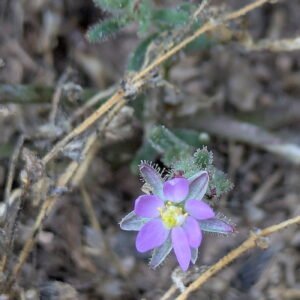
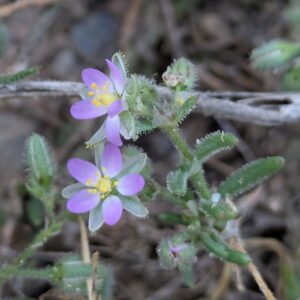
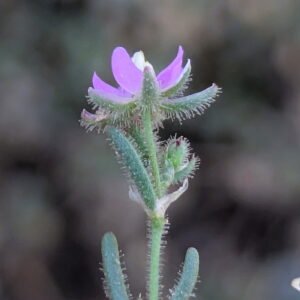
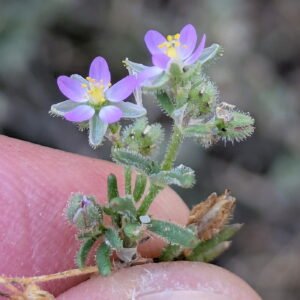
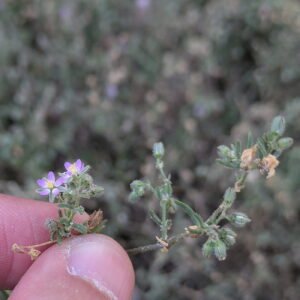
Spergularia bocconei is generally a low-growing plant with slender, branching stems. Its leaves are narrow and relatively small, giving the plant a fine, delicate appearance.
The flowers are small and typically have five petals, with the precise coloration and appearance varying according to the species and growing conditions. Like other members of Spergularia, the plant can be difficult to notice among surrounding vegetation because of its small size.
Habitat
The species is associated particularly with Mediterranean environments and can occur in open, relatively dry habitats. Plants of the genus Spergularia are notable for their ability to tolerate challenging conditions, including soils with relatively high salt concentrations.
It may occur in disturbed ground, rocky areas, coastal habitats, and other open locations where competition from larger plants is limited.
Distribution
Spergularia bocconei is a Mediterranean species. Its distribution is associated with southern European and Mediterranean regions, where the climate provides the dry conditions characteristic of much of its habitat.
As with many small Mediterranean annuals, its local presence can be highly dependent on seasonal rainfall and habitat conditions.
Flowering
Flowering generally occurs during the period when suitable moisture and temperatures are available. In Mediterranean climates, this can mean that the plant is most visible during spring and early summer, before the onset of prolonged summer dryness.
The small flowers are adapted for reproduction in open habitats where the plant completes its life cycle relatively quickly.
Adaptations
One of the notable characteristics of Spergularia species is their ability to survive in dry and sometimes saline environments. Their relatively small stature and life cycle allow them to take advantage of favorable seasonal conditions without competing directly with larger perennial plants.
These adaptations make Spergularia bocconei part of the specialized flora found in Mediterranean open habitats.
Spergularia bocconei in Cyprus
Spergularia bocconei is native to Cyprus and is included in the modern Plants of the World Online distribution data for the island. Its wider native range extends across Mediterranean regions and eastward into parts of the Middle East and Iran.
Its inclusion in Meikle's Flora of Cyprus is also specifically cited by Kew as one of the sources supporting the species' occurrence and taxonomic treatment.
In Cyprus, the species forms part of the island's characteristic Mediterranean flora. Its small size means it can easily be overlooked, particularly when growing among other low herbs. Like other members of Spergularia, it is associated with open habitats and has adaptations that allow the genus to occur in relatively dry or saline environments.
How to identify Spergularia bocconei
Three species exist in Cyprus, S. marina, S. diandra, and S. bocconei.
S. diandra's petals are white to bright pink, the petal tips darker, and the flowers have 2-3 stamens, rarely more.
S. bocconei differs from Spergularia diandra in that the tips of the petals are not darker than the rest of the petals, and differs from Spergularia marina in that the petals do not have a white spot at the base.