Date Created: 19.03.2023
Last Modified: 02.05.2026
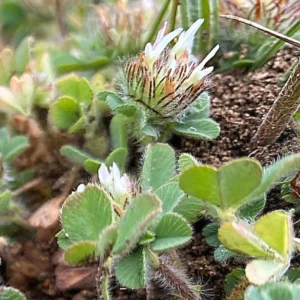
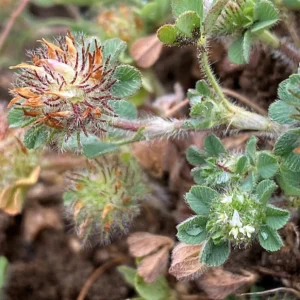
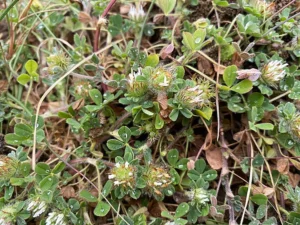
Trifolium cherleri, commonly known as Cherler's Clover, is a small, prostrate annual herb belonging to the Fabaceae family. This species is easily recognized by its densely hairy, globose flower heads that appear to sit directly on a bed of wide, leaf-like bracts. It is a common feature of dry, rocky Mediterranean pastures and grasslands in Cyprus.
Common Cypriot Names
The formal Modern Greek translation is Τριφύλλι του Σερλέρ [Trifylli-tou-Serler].
Common English Names
- Cherler's Clover
- Lowland Clover
- Small Round-headed Clover
Etymology of Trifolium cherleri
The name of the genus, "Trifolium" derives from the Ancient Greek "τρία" [tria], meaning "three" and the Latin "folium", which means "leaf", hence "three-leafed", referring to the three leaflets that comprise a leaf. This word is a calque of the Ancient Greek "τρίφυλλο" [trifyllo], which actually means the same thing. The species' name, "cherleri", is a tribute to Jean Henri Cherler (1570-1610), Swiss physician and botanist, professor at the Academy in Nîmes (it is quite possible that he was the one who recorded it first).
Botanical Structure and Floral Details of Trifolium cherleri
Floral Details
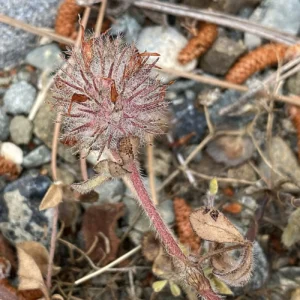
The individual flowers are small, usually 7–9 mm long. The standard petal is slightly longer than the wings and keel, a characteristic proportion for this species. The calyx tube has 20 veins, though these are often obscured by the dense, white villose hairs that characterize the fruiting head.
Key Characteristics for Diagnostic Identification from other Trifoliums
According to the definitive botanical keys established by Robert Desmond Meikle in his comprehensive Flora of Cyprus (Volume 1, 1977), this species is distinguished from other taxa of the genus in Cyprus by the below morphological features:
- Inflorescence Attachment: The flower heads are strictly sessile and terminal. This distinguishes it from species with pedunculate (stalked) heads such as Trifolium stellatum, Trifolium hirtum, Trifolium arvense, Trifolium pratense, Trifolium purpureum, Trifolium angustifolium, and Trifolium infame.
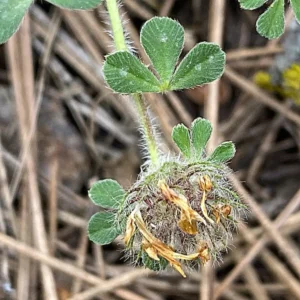
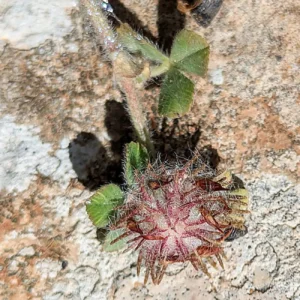
- Involucre Presence: The flower head is surrounded at the base by a conspicuous involucre formed by the dilated stipules of the three uppermost leaves. This SOS feature separates it from Trifolium scabrum, Trifolium dalmaticum, Trifolium striatum, Trifolium bocconei, and Trifolium ligusticum, which lack this organized, leaf-like surrounding structure.
- Calyx Indumentum: The calyx is densely villose (shaggy-haired) throughout. This distinguishes it from the glabrous or nearly glabrous calyx found in Trifolium resupinatum, Trifolium tomentosum, Trifolium spumosum, Trifolium fragiferum, Trifolium clusii, and Trifolium bullatum.
- Calyx Teeth: The calyx teeth are equal, subulate, and approximately the same length as the tube. This differentiates it from Trifolium hirtum, which has much longer teeth, and Trifolium clypeatum, which has unequal, leaf-like teeth.
- Corolla Color: The petals are whitish or very pale pink. This differentiates it from the vivid yellow-flowered species such as Trifolium campestre, Trifolium dubium, and Trifolium micranthum.
- Head Shape: The head is persistently globose or hemispherical. Unlike Trifolium suffocatum, which has axillary, crowded clusters, or Trifolium lappaceum, which becomes distinctly bristly in fruit, Cherler's Clover maintains a soft, rounded appearance.
Additional Identification Characteristics
Botanists like Zohary (1972) in the Flora Palaestina highlight that the obovate-cuneate leaflets of Trifolium cherleri are typically silvery-hairy on both sides. This uniform hairiness, combined with the way the head "nests" within the stipules, provides a distinct visual profile even before the florets fully expand.
How to identify Trifolium cherleri vs Trifolium pilulare
Trifolium cherleri looks similar to Trifolium pilulare, especially when their flowers disappear. Here are some key differences:
General key differences
Trifolium cherleri, often called Cherler's Clover or Cupped Clover, is characterized by its terminal (or pseudo-terminal) flower heads, which are subtended by an involucre of enlarged stipule-bracts. These stipule-bracts are typically suborbicular or broadly ovate and have a short acumen (a tapering point). The calyx teeth of Trifolium cherleri are quite noticeable, measuring around 4 mm long. The overall habit of the plant tends to be somewhat erect.
In contrast, Trifolium pilulare, known as Pill Clover or Ball Cotton Clover, features flower heads that are usually axillary, meaning they arise from the leaf axils, and these flower heads lack a distinct involucre of enlarged stipule-bracts. A very distinguishing characteristic of Trifolium pilulare is its fruiting calyx, which becomes subglobose (almost spherical) and more or less tomentose (densely covered in short, matted hairs), giving the fruiting head a cotton-ball-like appearance. The calyx teeth of Trifolium pilulare are inconspicuous in fruit. Furthermore, the peduncle (flower stalk) is typically shorter than the subtending leaf. The plant itself can have erect, ascending, or prostrate (lying flat) stems.
Dry fruit
The dry fruit of Trifolium cherleri retains the characteristic involucre of enlarged stipule-bracts that subtended the flower head. These bracts, though likely dried and papery, persist as a collar-like structure around the remains of the seed head. Additionally, the relatively long and pointed calyx teeth, prominent during flowering, also remain visible on the dried fruit, often protruding from the papery calyx. The overall appearance is a dry cluster of former florets surrounded by the persistent bracts and bearing these noticeable, dried calyx teeth, lacking a particularly woolly texture. The individual dried florets would likely remain somewhat contained within the dried calyx.
In contrast, the dead fruit of Trifolium pilulare is most notably defined by its persistent, subglobose calyx that becomes densely tomentose, retaining its woolly or cottony texture even in a dried state. This woolliness is a key identifier and stands in stark contrast to the fruit of Trifolium cherleri. As Trifolium pilulare lacks an involucre of enlarged stipule-bracts around its flower heads, this feature is absent in the dead fruit as well. The calyx teeth, which were inconspicuous during the fruiting stage, remain small and are often obscured by the dense, matted hairs of the dried calyx, making them less prominent than those of Trifolium cherleri. The dead fruit heads of Trifolium pilulare often remain clustered in the leaf axils, reflecting their original growth pattern and presenting as small, woolly balls. The individual dried florets would be largely obscured by the densely tomentose (woolly) fruiting calyx.
Geographical Distribution and Habitat of Trifolium cherleri
This taxon is native to the entire Mediterranean region, extending from Portugal and Morocco in the west to Jordan, Turkey, and Iraq in the east. It thrives in dry, sun-drenched habitats, particularly in degraded garigue, phrygana, and fallow fields. It prefers neutral to acidic soils and is a common member of early spring ephemeral communities.
Distribution in Cyprus
In Cyprus, the plant is widespread and can be found in nearly all botanical divisions. It is particularly abundant in the Akamas Peninsula, the Troodos foothills (on both igneous and calcareous substrates), the Mesaoria plain, and the Pentadaktylos range. Its presence is well-documented from the Paphos coast to the Karpas peninsula.
Elevation Range in Cyprus
According to verified records, Trifolium cherleri occurs in Cyprus from sea level up to approximately 1,500 meters. While it is most frequent in the lowland and hilly zones, it reaches high altitudes in the Troodos forest clearings where the soil remains sufficiently dry and open.
Flowering Period in Cyprus
The flowering season is concentrated in the spring, typically from March to May. At lower elevations, it may begin as early as February, while at the upper limits of its elevation range, flowering can persist into early June before the plant succumbs to the summer drought.
Conservation Status in Cyprus
This species is classified as Least Concern (LC) in the Red Data Book of the Flora of Cyprus. It is a very common annual with stable populations across the island. It shows high resilience to grazing pressure, which often benefits the species by reducing competition from taller grasses.
Is Trifolium cherleri Suitable for Gardens?
Cherler's Clover is not typically used as an ornamental plant and seeds are rarely available in the commercial market. However, it is an excellent nitrogen-fixer for "wildlife" or "ecological" gardens. In Cyprus, collection of wild seeds is subject to general forest laws, so it is best enjoyed in its natural habitat.
Toxicity and Safety
There are no documented cases of toxicity specifically for Trifolium cherleri. However, like many clovers, it may contain trace amounts of cyanogenic glycosides or isoflavones. According to Dr. James Duke's database of phytochemicals, while generally safe for livestock, excessive consumption of some Trifolium species can occasionally lead to bloat in ruminants.
For humans, the plant is considered non-toxic. However, there is no evidence supporting its use as a food source, and the high fiber and saponin content in many wild legumes can cause digestive discomfort if ingested in large quantities. It is always advised to avoid consumption of wild legumes without expert botanical and toxicological verification.
Medicinal Properties
Nitrogen Fixation and Soil Health
While not traditionally used in human medicine, Trifolium cherleri possesses medicinal value for the soil. Like other legumes, it forms a symbiotic relationship with Rhizobium bacteria. Studies in Mediterranean agrostology highlight its role in enriching nitrogen-depleted soils, which indirectly supports the growth of other medicinal plants in the same ecosystem.
Phytochemical Profile
General research on Mediterranean clovers suggests the presence of flavonoids and phenolic acids. While specific studies on T. cherleri are limited, related species have been investigated for their antioxidant properties. However, there are no clinical trials or authoritative studies that validate the medicinal use of this specific taxon for treating human diseases.
Fascinating Insights About Trifolium cherleri
Cherler's Renaissance Connection
The plant serves as a living tribute to the Cherler-Bauhin botanical dynasty. Jean-Henri Cherler worked alongside Jean Bauhin on the monumental Historia Plantarum Universalis. This species name ensures that the contributions of these early pioneers, who moved botany away from pure herbalism toward modern science, are remembered by every botanist in the Mediterranean.
The "Cradle" Flower Head
The way the flower head sits within the dilated stipules is an evolutionary adaptation. This "nesting" habit protects the delicate developing florets from desiccation and mechanical damage by wind or grazing insects. The bract-like stipules act as a micro-climate regulator, trapping a thin layer of humidity around the base of the inflorescence.
Resilience to Overgrazing
Trifolium cherleri is a "grazing-tolerant" species. Its prostrate growth habit means that the primary reproductive parts - the sessile flower heads - are often too low for sheep and goats to easily crop. This allows the plant to survive and set seed even in the most heavily grazed pastures of rural Cyprus.
Natural Soil Stabilizer
In the dry, rocky soils of Cyprus, the spreading stems and dense hairy heads of this clover help prevent surface soil erosion during the heavy late-spring rains. By creating a low-lying carpet of vegetation, it traps moisture and organic matter, acting as a natural nurse plant for the subsequent successional stages of the Mediterranean flora.