Date Created: 13.03.2023
Last Modified: 17.10.2026
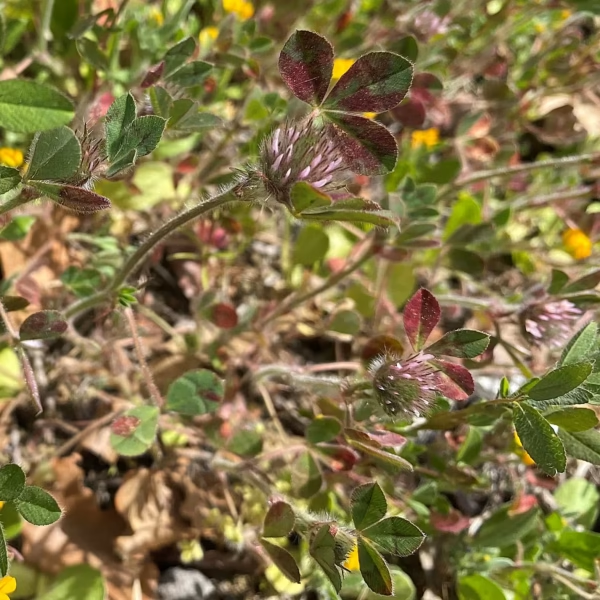
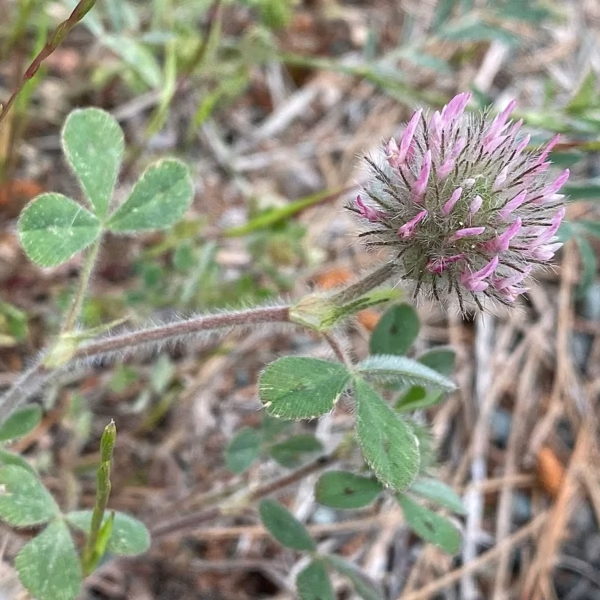
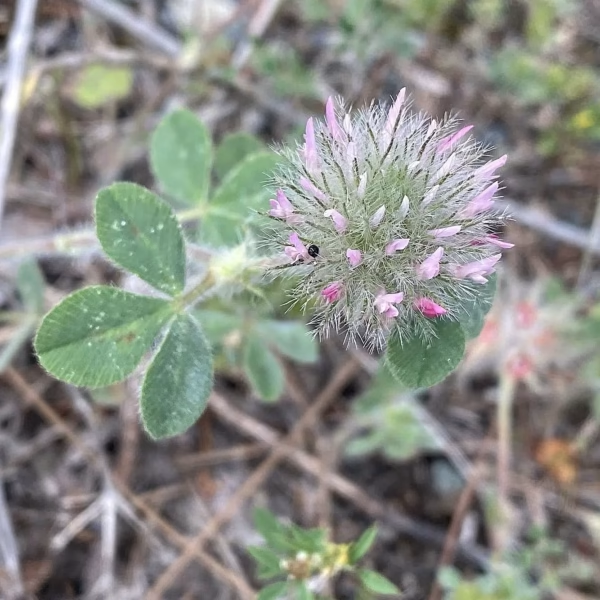
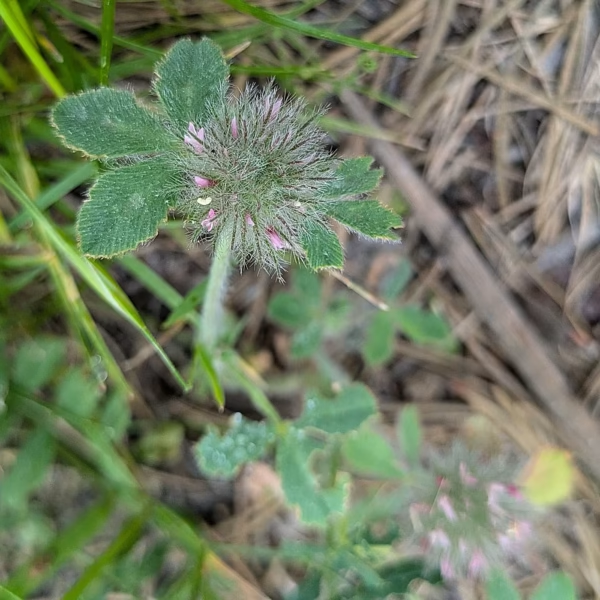
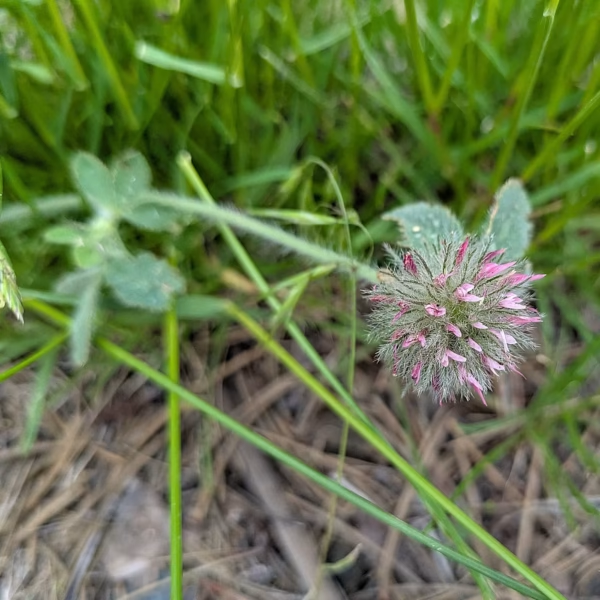
Trifolium hirtum All. is an annual legume native to the Mediterranean region and western Asia, including Cyprus. It is recognized by its conspicuously hairy stems and calyces, rounded flower heads, and pink to purple flowers. In Cyprus it has been recorded mainly in the central mountains and Paphos District, where it grows on roadsides and other disturbed ground. Its accepted name and native range are confirmed by Plants of the World Online (POWO).
Common Cypriot Names
A Cyprus-focused flora page gives the Greek name Τριφύλλι το τριχωτό [trifílli to trichotó], literally “the hairy clover”.
Common English Names
- Rose clover
Etymology of Trifolium hirtum
The etymology of the genus name Trifolium combines Latin tres or tria, “three,” and folium, “leaf,” referring to the characteristic three leaflets. The species epithet hirtum is Latin for “hairy” or “rough-haired,” referring to the plant’s conspicuous vestiture, especially the hairs on its stems and calyces. Carlo Allioni published the accepted name in 1789.
Key Characteristics for Diagnostic Identification
The Cyprus checklist’s Trifolium identification key cites Robert Desmond Meikle’s Flora of Cyprus, Volume 1 (1977), and Zohary and Heller’s The Genus Trifolium (1984). The features below emphasize the characters useful for recognizing this species among the 35 Cyprus taxa named in the question. Several clovers share individual traits, so identification should use a combination and, where necessary, the full dichotomous key; a shared feature alone does not establish identity.
- Whole-plant indumentum and growth: Look for a clearly hairy annual with erect, non-rooting stems. This character helps distinguish Trifolium hirtum from creeping, node-rooting T. repens and T. fragiferum subsp. fragiferum, but hairiness alone is not decisive: T. arvense, T. cherleri, T. scabrum, T. striatum, and T. tomentosum are also notably hairy or woolly in relevant parts. The same whole-plant check must include T. angustifolium, T. argutum, T. boissieri, T. campestre subsp. campestre, T. campestre subsp. paphium, T. clypeatum, T. dasyurum, T. diffusum, T. dubium, T. echinatum, T. fragiferum subsp. bonannii, T. globosum, T. glomeratum, T. grandiflorum, T. lappaceum, T. leucanthum, T. nigrescens subsp. petrisavii, T. pamphylicum, T. physodes, T. pilulare, T. pratense, T. resupinatum, T. scutatum, T. spumosum, T. stellatum, T. subterraneum subsp. oxaloides, T. subterraneum subsp. subterraneum, and T. suffocatum against the whole diagnostic combination rather than stem hair in isolation.
- Calyx hairs, veins, and teeth: Inspect mature flowers closely. The calyx is densely hairy, has 20 veins, and bears teeth that are subequal (the lowest may be slightly longer), much longer than the tube, and shorter than the corolla. This combination separates it from T. cherleri, whose Cyprus account describes equal calyx teeth about as long as the tube, and from T. clypeatum and T. scutatum, associated in the local key tradition with conspicuously unequal, leaf-like teeth; the shield-like lowest tooth is especially characteristic of T. clypeatum. It also differs in calyx structure from the woolly heads of T. arvense and the fruiting calyx of T. tomentosum, whose throat has a dense hair ring. Check the same characters in T. angustifolium, T. argutum, T. boissieri, T. campestre subsp. campestre, T. campestre subsp. paphium, T. dasyurum, T. diffusum, T. dubium, T. echinatum, T. fragiferum subsp. bonannii, T. fragiferum subsp. fragiferum, T. globosum, T. glomeratum, T. grandiflorum, T. lappaceum, T. leucanthum, T. nigrescens subsp. petrisavii, T. pamphylicum, T. physodes, T. pilulare, T. pratense, T. repens, T. resupinatum, T. scabrum, T. spumosum, T. stellatum, T. striatum, T. subterraneum subsp. oxaloides, T. subterraneum subsp. subterraneum, and T. suffocatum with a proper key or mature calyx specimens; I have not assigned unsupported tooth measurements to those taxa.
- Flower colour and corolla relative to the calyx: The corolla is pink to purple and projects beyond the calyx. It therefore contrasts with the yellow-flowered T. campestre subsp. campestre, T. campestre subsp. paphium, and T. dubium; colour is still not enough to separate it from other pink, purple, or pale-flowered clovers. Compare its long, exserted corolla and hairy, long-toothed calyx with T. angustifolium, T. argutum, T. arvense, T. boissieri, T. cherleri, T. clypeatum, T. dasyurum, T. diffusum, T. echinatum, T. fragiferum subsp. bonannii, T. fragiferum subsp. fragiferum, T. globosum, T. glomeratum, T. grandiflorum, T. lappaceum, T. leucanthum, T. nigrescens subsp. petrisavii, T. pamphylicum, T. physodes, T. pilulare, T. pratense, T. repens, T. resupinatum, T. scabrum, T. scutatum, T. spumosum, T. stellatum, T. striatum, T. subterraneum subsp. oxaloides, T. subterraneum subsp. subterraneum, T. suffocatum, and T. tomentosum by the full flower-and-calyx suite, not colour alone.
- Head position and structure: The flower heads are globose and terminal; local Cyprus material places this species among taxa with stalked (pedunculate) heads. In the Cyprus account, T. cherleri contrasts as a sessile head that appears to sit on broad, leaf-like bracts; T. stellatum, T. arvense, T. pratense, and T. angustifolium are also reported as having pedunculate heads, so stalk presence does not distinguish this species from those four. Compare head size, bracts, calyx and flower colour as well against T. argutum, T. boissieri, T. campestre subsp. campestre, T. campestre subsp. paphium, T. clypeatum, T. dasyurum, T. diffusum, T. dubium, T. echinatum, T. fragiferum subsp. bonannii, T. fragiferum subsp. fragiferum, T. globosum, T. glomeratum, T. grandiflorum, T. lappaceum, T. leucanthum, T. nigrescens subsp. petrisavii, T. pamphylicum, T. physodes, T. pilulare, T. repens, T. resupinatum, T. scabrum, T. scutatum, T. spumosum, T. striatum, T. subterraneum subsp. oxaloides, T. subterraneum subsp. subterraneum, T. suffocatum, and T. tomentosum using the complete key; head attachment alone is not diagnostic.
- Leaflets and stipules: Examine the three leaflets and the stipules together: the leaflets are obovate to narrowly obovate, and the narrow stipules taper to long bristle-like tips. These vegetative traits support identification when flowers are immature, but should be combined with the calyx characters above. Check them against T. angustifolium, T. argutum, T. arvense, T. boissieri, T. campestre subsp. campestre, T. campestre subsp. paphium, T. cherleri, T. clypeatum, T. dasyurum, T. diffusum, T. dubium, T. echinatum, T. fragiferum subsp. bonannii, T. fragiferum subsp. fragiferum, T. globosum, T. glomeratum, T. grandiflorum, T. lappaceum, T. leucanthum, T. nigrescens subsp. petrisavii, T. pamphylicum, T. physodes, T. pilulare, T. pratense, T. repens, T. resupinatum, T. scabrum, T. scutatum, T. spumosum, T. stellatum, T. striatum, T. subterraneum subsp. oxaloides, T. subterraneum subsp. subterraneum, T. suffocatum, and T. tomentosum in the Cyprus key.
Additional Identification Characteristics
On a good flowering specimen, check a mature calyx under magnification: its 20 nerves may be obscured by dense hairs, the throat is constricted by hairs, and the teeth remain erect as the calyx matures. An important caution is that sources differ in how they describe the head’s attachment: some technical accounts call the heads sessile, whereas the Cyprus comparison account groups this taxon with pedunculate-headed clovers. For a Cyprus specimen, assess the point of attachment directly and follow the regional key rather than relying on a single foreign description.
Geographical Distribution and Habitat of Trifolium hirtum
The species is native across the Mediterranean region toward Iran and occurs as an annual in open habitats.
Elevation Range in Cyprus
The reported Cyprus range is 150–1,400 m above sea level.
Flowering Period in Cyprus
Flowering is reported from March until June, with onset sometimes delayed until April. Season varies with elevation, rainfall, and the drying of annual grassland habitats.
Is Trifolium hirtum Suitable for Gardens?
It can be grown where a self-seeding annual legume is wanted for a sunny, well-drained site, meadow-style planting, or forage-oriented cover. It is not generally a compact ornamental perennial, and its seasonal growth and reseeding habit may not suit a formal border. Commercial seed is available internationally as forage or cover-crop seed.