Date Created: 19.03.2023
Last Modified: 13.04.2026
Trifolium spumosum is a distinctive annual herb belonging to the Fabaceae family, commonly known as Bladdery Clover. In Cyprus, this plant is an indigenous taxon frequently found in open pastures, grassy fields, and along the margins of cultivated land. A common synonym encountered in older botanical literature is Amarenus spumosus, though the species is almost universally recognized under its Linnaean name in modern Mediterranean floras.
Cypriot Names
The official Latin name translated into Greek is Τριφύλλιον το αφρώδες. Locally, it is generally referred to as Τριφύλλι [triphylli], meaning "clover".
Common English Names
- Bladdery Clover
- Spumose Clover
- Frothy Clover
Etymology of Trifolium spumosum
The etymology of the genus name Trifolium originates from the Latin tres, meaning "three," and folium, meaning "leaf." This refers to the characteristic trifoliate leaf structure common to the genus. The name was well-established in Classical Latin to describe various clovers and medicks used for fodder.
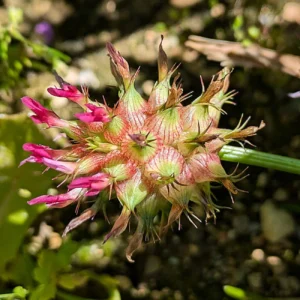
The specific epithet spumosum is derived from the Latin spuma, meaning "foam" or "froth," combined with the suffix -osus, indicating abundance. This refers to the unique appearance of the inflorescence during the fruiting stage, where the calyces become highly inflated and membranous, resembling a cluster of delicate bubbles or a mass of foam.
Synonyms
- Amarenus spumosus (L.) C.Presl (1832)
- Mistyllus spumosus (L.) Presl (1832)
- Trifolium spumosum var. minus Rouy (1899)
Key Characteristics for Diagnostic Identification
According to the definitive botanical keys established by Robert Desmond Meikle (1923–2021) in his comprehensive Flora of Cyprus, this species is distinguished from other members of the genus in Cyprus by the following features:
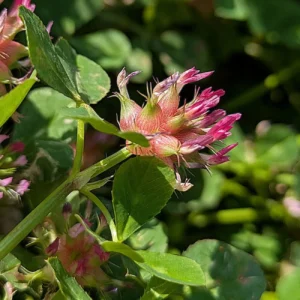
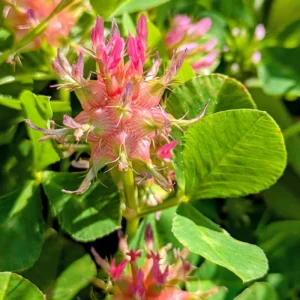
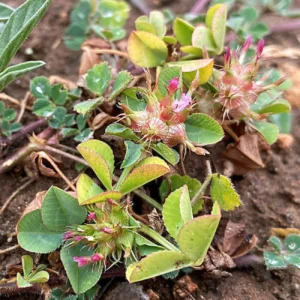
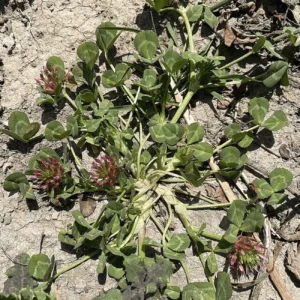
- Inflorescence Shape: The flower heads are terminal, globose to ovoid, and notably dense, usually measuring 1.5–3 cm in diameter.
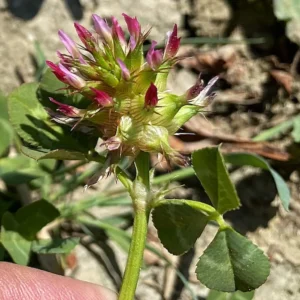
- Calyx Inflation: The most striking feature is the calyx, which becomes greatly inflated and bladder-like in fruit, reaching up to 10 mm in length.
- Calyx Veining: The inflated calyx is membranous and marked by approximately 20 prominent, longitudinal veins connected by a network of smaller transverse veinlets.
- Corolla Color: The petals are typically pink or purplish, though they are often shorter than or equal to the calyx teeth, making the "frothy" calyx the dominant visual element.
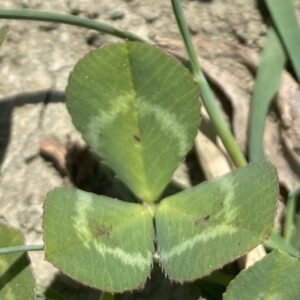
- Leaflet Morphology: The leaflets are broadly obovate to cuneate, with finely serrulated margins and a distinct pattern of lateral veins that are thickened toward the edge.
- Seed Pod: The legume is contained within the inflated calyx, typically carrying 1–4 small, yellowish-brown, ovoid seeds.
Botanical Structure and Floral Details of Trifolium spumosum
Vegetative Morphology
The stems of Trifolium spumosum are usually prostrate or ascending, reaching 10–40 cm in length. They are glabrous or only sparsely hairy. The trifoliate leaves are carried on long petioles, and the stipules are large, ovate, and membranous with distinct green veining.
Reproductive Organs
The flowers are sessile and packed into a compact head. The calyx tube is initially cylindrical but rapidly expands after pollination. The teeth of the calyx are subequal and remain green and stiff even as the tube becomes translucent and "spumose," creating a protective cage around the developing fruit.
Geographical Distribution and Habitat of Trifolium spumosum
This species is widely distributed throughout the Mediterranean region, extending from the Atlantic coast of Europe and North Africa to the Middle East and the Caucasus. It is a typical component of Mediterranean-type ecosystems, thriving in areas with wet winters and dry summers.
Distribution in Cyprus
In Cyprus, the plant is common and widespread across various districts, including Nicosia, Limassol, and Paphos. It is particularly frequent in the Mesaoria plain and the lower hills of the Troodos and Kyrenia ranges. It prefers open, sunny positions and does not tolerate deep shade or dense forest cover.
Elevation Range in Cyprus
The species is primarily found in the lowlands and foothills, ranging from sea level up to approximately 250 meters. While it is most abundant in the warmer central plains, it can occasionally be found at higher altitudes on southern-facing, sun-drenched rocky slopes.
Flowering Period in Cyprus
The flowering period typically occurs from March to May. The vibrant pink heads are a common sight in the spring meadows of Cyprus, quickly transitioning to the characteristic straw-colored "bubble" heads as the heat of late May and June sets in.
Conservation Status in Cyprus
Based on its wide distribution and high population density, Trifolium spumosum is categorized as Least Concern (LC). It is a resilient species that benefits from moderate grazing, which keeps taller grasses at bay and allows this prostrate clover to receive adequate sunlight.
Is Trifolium spumosum Suitable for Gardens?
While not a traditional ornamental, it can be used in "wildflower meadow" mixes or as a temporary groundcover in sunny, dry areas. The "frothy" seed heads provide unique visual interest and are excellent for dried floral arrangements. It requires well-drained soil and minimal summer water once the seeds have set.
Toxicity and Safety
There are no reports of toxicity associated with Trifolium spumosum. Like many clovers, it is a valuable forage plant for livestock. However, like all legumes, it contains phytoestrogens, which are only a concern for ruminants if consumed in massive, exclusive quantities over long periods.
Medicinal Properties
There is limited documentation regarding the medicinal use of this specific clover in Cyprus. In general Mediterranean herbalism, clovers have been used for their mild diuretic and alterative properties. However, its primary value remains ecological and agricultural rather than pharmaceutical.
Fascinating Insights About Trifolium spumosum
Aerodynamics of Seed Dispersal
Authoritative botanical research suggests that the inflated, bladder-like calyx of Trifolium spumosum is an adaptation for anemochory (wind dispersal). The lightweight, air-filled structures act like miniature sails or "tumbleweeds," allowing the entire seed head to be rolled across the flat Cypriot plains by spring winds, effectively spreading seeds away from the parent plant.
Soil Nitrogen Enrichment
Trustworthy ecological studies confirm that, like other members of the Fabaceae, this species participates in a symbiotic relationship with Rhizobium bacteria. These bacteria colonize the plant's root nodules and fix atmospheric nitrogen, significantly improving soil fertility. This makes the plant a critical component in the natural rejuvenation of overgrazed or depleted Mediterranean soils.
Evolutionary Mimicry and Protection
Authoritative morphological analysis indicates that the rigid, prickly teeth surrounding the delicate, inflated calyx tube serve as a protective mechanism against seed predation. By encasing the nutritious seeds in a "bubble" of air protected by stiff spines, the plant ensures that the seeds survive the dry summer months until the first autumn rains trigger germination.