Τριφύλλι το στομφώδες
Etymology of Trifolium spumosum
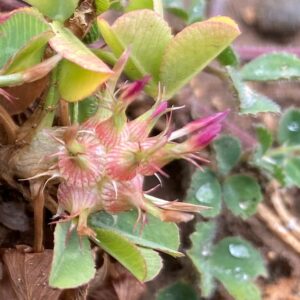
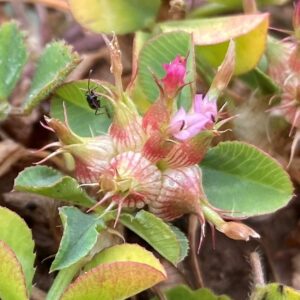
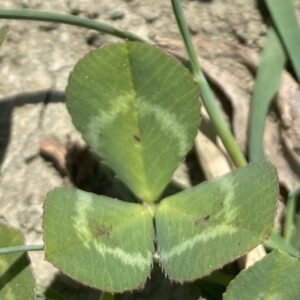
The name of the genus, "Trifolium" derives from the Ancient Greek "τρία" [tria], meaning "three" and the Latin "folium", which means "leaf", hence "three-leafed", referring to the three leaflets that comprise a leaf. This word is a calque of the Ancient Greek "τρίφυλλο" [trifyllo], which actually means the same thing. "Spumosum" is the neutral Latin for "bombastic'', refering to its obovate, inflated calyx.
The habitat of Trifolium spumosum
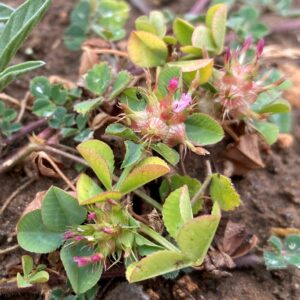
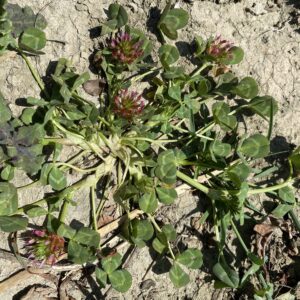
Trifolium spumosum, commonly known as bladder clover, thrives in a Mediterranean climate and is native to the Mediterranean region and parts of Western Asia. It is an annual legume that typically grows in damp grasslands, coastal habitats, seasonally wet spots within phrygana (Mediterranean scrub), olive groves, and along field margins. This clover prefers well-drained soils ranging in texture from sandy loam to clay, and can tolerate soil pH from mildly acidic to mildly alkaline. It is adapted to regions with moderate rainfall, typically between 325-500 mm annually, and is not tolerant of prolonged waterlogging or high salinity. Bladder clover can be found growing from sea level up to an altitude of around 850 meters.
Trifolium spumosum in Cyprus
Around 36 Trifolium taxa (species and subspecies) have been identified in the wild Cypriot habitat so far. Trifolium spumosum is an uncommon plant in Cyprus. It is encountered all around the island, especially in the southern coastal areas, but not in northeastern Cyprus, up to an altitude of 250 meters. It primarily appears on roadsides, field margins, grassland, and near the seaside. Its flowering period is from February until April.
Its unique characteristic is the calyx
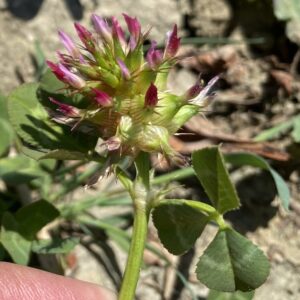
The fruit of Trifolium spumosum, the bladder clover, possesses a truly unique and distinctive characteristic: its inflated, bladder-like calyx that encloses the actual fruit (a small legume pod). This enlarged calyx is the most striking feature and gives the plant its common name. As the flower matures and the fruit develops, the calyx expands significantly, becoming spherical or ovoid and often reaching a diameter of 1-2 cm. This inflated structure is typically pale green or straw-colored, often with prominent veins, and has a somewhat translucent appearance when dry. The true fruit, the small pod, remains hidden within this inflated bladder, offering a fascinating example of how the persistent calyx plays a crucial role in seed dispersal, potentially by wind or water, and protection.