Date Created: 10.06.2022
Last Modified: 11.04.2026
Micromeria nervosa is a perennial, woody-based herb belonging to the Lamiaceae family. It is commonly found throughout the Mediterranean region and is well-known for its aromatic properties. A frequent synonym often encountered in botanical literature for this species is Satureja nervosa, reflecting historical shifts in the classification of the savory and micromeria groups.
Cypriot Names
The official Latin name translated into Greek is Μικρομέρια η νευρώδης. Locally, it is known as Μελισσοχόρτι [melissokhorti], which means "bee-herb" due to its ability to attract pollinators, and Αντρουκλατζιά [antrouklatzia], though this name is more traditionally used for shrubs, it is sometimes applied to these small, woody herbs in specific highland villages.
Common English Names
- Veined Micromeria
- Nervous Savory
- Mediterranean Micromeria
Etymology of Micromeria nervosa
The etymology of the genus name Micromeria originates from the Ancient Greek words μικρός [mikros], meaning "small," and μέρος [meros], meaning "part." This refers to the diminutive size of the flowers and leaves that characterize most species within this aromatic genus.
The specific epithet nervosa is derived from the Latin nervosus, meaning "veiny" or "sinewy." This name refers to the prominent, thickened veins clearly visible on the underside of the leaves and the strongly ribbed calyx of the flowers, which are defining morphological characteristics used to identify the species in the field.
Synonyms
- Satureja nervosa
- Micromeria plumosa
- Satureja Plumierii
Botanical Structure and Floral Details of Micromeria nervosa
Vegetative Morphology
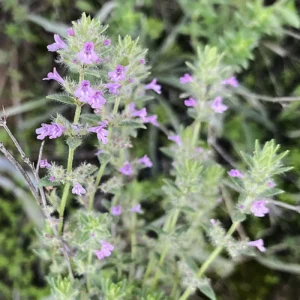
The stems of Micromeria nervosa are square in cross-section, a typical trait of the mint family, and are often covered in fine, greyish hairs. The leaves are sessile or very short-stalked, arranged oppositely along the stems. Their leathery texture and rolled-back margins are evolutionary adaptations to reduce water loss in arid environments.
Reproductive Organs
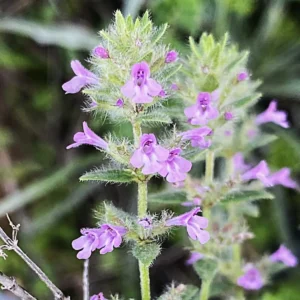
The small flowers are labiate, meaning they have two distinct lips. The upper lip is straight and slightly notched, while the lower lip is three-lobed. These tiny blooms are clustered in the leaf axils towards the top of the stems, creating a colorful, tiered effect during the peak of the blooming season.
How to Identify Micromeria nervosa
According to the definitive botanical keys established by Robert Desmond Meikle in his Flora of Cyprus (1977, 1985), Micromeria nervosa belongs to a complex genus where specific morphological details are essential for distinguishing it from its local congeners.
Comparison with Micromeria microphylla
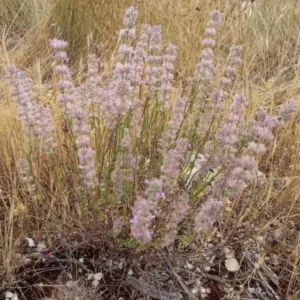
This species is primarily distinguished from Micromeria nervosa by its growth habit and calyx; while Micromeria nervosa is an erect or ascending plant with a calyx covered in long, spreading hairs, Micromeria microphylla (often referred to under the genus marrubiifolium in older contexts) typically presents as a more prostrate or cushion-like herb with much smaller, more rounded leaves that lack the intensely thickened, prominent ribbing of the former.
Comparison with Micromeria cristata
Although Micromeria cristata is rare and restricted to specific rocky elevations, it is easily separated from Micromeria nervosa by its floral arrangement; the flowers of Micromeria cristata are typically more crowded into short, dense, almost head-like terminal spikes, whereas Micromeria nervosa features a more tiered arrangement of many-flowered verticillasters.
Comparison with Micromeria myrtifolia
The most reliable diagnostic feature provided by Meikle remains the leaf venation, as Micromeria nervosa has a leaf underside with very thick, raised veins that are significantly more pronounced than the nearly invisible or very fine venation on the leaves of Micromeria myrtifolia.
Comparison with Micromeria chionistrae
Inhabiting the high peaks of Troodos, Micromeria chionistrae differs from Micromeria nervosa by its more slender, less woody appearance and its leaves which are not as strongly revolute at the margins, lacking the rigid, leathery texture characteristic of the lowland nervosa populations.
Calyx and Nerves
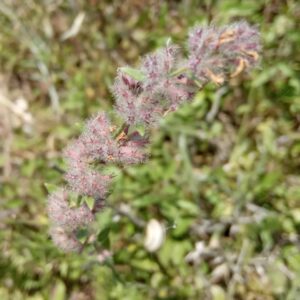
Meikle emphasizes that the calyx of Micromeria nervosa is strictly 13-nerved and distinctly bristly with spreading hairs, a technical detail that differentiates it from Satureja species and other small-leaved labiates that may superficially resemble it in the dry garigue.
Geographical Distribution and Habitat of Micromeria nervosa
This species is widely distributed across the Mediterranean region, including Southern Europe, North Africa, and the Middle East. In Cyprus, it is a very common indigenous plant. It typically grows on dry, rocky limestone hillsides, garigue, and open maquis from sea level up to mid-altitudes.
Distribution in Cyprus
The plant is widespread across almost the entire island, including the Pentadaktylos range, the Troodos foothills, and the Akamas Peninsula. It is particularly abundant in the central and southern coastal districts where rocky substrates prevail. It is a fundamental component of the lowland shrub communities.
Flowering Period in Cyprus
The flowering period of this aromatic herb typically occurs from February to June. The most prolific blooming is usually seen in March and April, when the hillsides are covered in its small pink flowers. This timing ensures it completes its flowering before the soil moisture is entirely depleted by summer.
Conservation Status in Cyprus
According to the current botanical assessments, this species is classified as Least Concern (LC). It is one of the most common aromatic plants on the island and is not currently facing significant threats, as it adapts well to various soil types and survives in degraded habitats.
Is Micromeria nervosa Suitable for Gardens?
This species is highly suitable for Mediterranean-style rock gardens or xeriscaping. It is extremely drought-tolerant once established and requires very little maintenance. Its compact growth habit and intense fragrance make it an excellent choice for borders or as a nectar plant for attracting bees and butterflies.
Toxicity and Safety
There are no known toxic effects associated with Micromeria nervosa for humans or livestock. In fact, many species in this genus have a long history of being used as tea or flavoring. However, like all aromatic plants rich in essential oils, it should be used in moderation during pregnancy.
Medicinal Properties
In traditional Mediterranean medicine, infusions made from this plant have been used to treat digestive issues, including bloating and stomach aches. The essential oils contain compounds with antimicrobial and antifungal properties. Modern research often focuses on its antioxidant potential, though it is primarily used as a domestic herbal remedy.
Fascinating Insights About Micromeria nervosa
Pollinator Magnetism and Biodiversity
One of the most fascinating insights into this plant is its role as a keystone nectar source for solitary bees in Cyprus. Despite the small size of individual flowers, the sheer density of the blooms in a single colony provides a massive caloric reward, supporting local insect biodiversity throughout the spring.
Drought Resistance and Leaf Architecture
The "nervosa" or veiny nature of the leaves is part of a complex survival strategy. The thick veins provide structural support to the leaves, preventing them from collapsing during extreme dehydration. This architecture allows the plant to remain evergreen or semi-evergreen even during the harshest periods of the Cypriot summer.
Aromatic Chemistry as a Defense
The pungent scent produced by the leaves is not for human enjoyment but serves as a chemical defense mechanism. The volatile oils deter herbivores and inhibit the growth of competing fungi and bacteria. This chemical arsenal allows the plant to thrive in high-traffic grazing areas where less aromatic plants are quickly consumed.