Nepeta italica subsp. troodi is a rare, aromatic perennial herb that is strictly endemic to the Troodos Mountains of Cyprus. As a specialized member of the Lamiaceae family, it has adapted to high-altitude environments, making it a unique and precious component of the island's mountain biodiversity.
Cypriot Names
Νέπετα η ιταλική υποείδος η τροόδια
Etymology of Nepeta italica subsp. troodi
The etymology of the genus name "Nepeta" stems from the ancient Etruscan city Nepete. The species name "italica" identifies its broader Italian and Mediterranean origins. Finally, the subspecific epithet "troodi" is a Latin genitive meaning "of Troodos", formally marking this unique plant as a strictly endemic treasure belonging to the high mountain Troodos peaks of Cyprus.
Taxonomy and Diversity Within the Genus
Distinctive Island Evolution
There are several subspecies within the Nepeta italica complex. Nepeta italica subsp. troodi is distinguished from mainland varieties by its more compact growth and specific floral bract shapes. These subtle differences highlight the "island evolution" and genetic isolation typical of ancient Cypriot mountain flora.
Global Context of Nepeta
Globally, the Nepeta genus contains over 250 species. While many are common garden plants, high-altitude endemics like Nepeta italica subsp. troodi are of particular interest to scientists studying how plants adapt to isolation. It represents a living record of the island’s unique geological and botanical history.
Botanical Identification and Physical Structure
Grey Hairs and Upright Stature
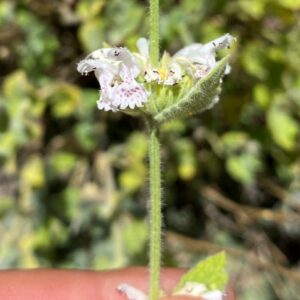
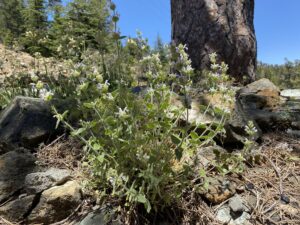
This subspecies typically forms a woody base, growing in an upright fashion to heights of 20 to 50 centimeters. The stems are covered in a dense layer of fine, greyish hairs. This "tomentose" coating helps Nepeta italica subsp. troodi reflect intense alpine sunlight and retain vital moisture.
Heart-Shaped Leaves and Minty Aroma
The leaves are small, heart-shaped, and feature distinctly scalloped or "crenate" edges. When brushed or crushed, the foliage of Nepeta italica subsp. troodi releases a pungent, minty fragrance. This scent is caused by essential oils that serve as a natural chemical defense against herbivores in the wild.
High-Altitude Habitats and Distribution
The Specialized Troodos Range
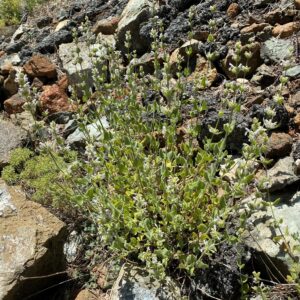
The distribution of Nepeta italica subsp. troodi is restricted to the highest peaks of the Troodos range. It is most commonly found at elevations between 1,200 and 1,900 meters. It thrives in open pine forests and among rocky outcrops, particularly on igneous (serpentine) geological formations.
Survival in Rocky Fissures
Unlike the broader species found across Italy, Nepeta italica subsp. troodi requires the cooler temperatures and seasonal snow cover of high mountains. It often settles in rocky fissures where its deep roots can access moisture trapped beneath stones during the notoriously dry Mediterranean summer months.
Ecological Cycles and Pollination
Summer Flowering and Tiered Clusters
The peak flowering time for Nepeta italica subsp. troodi occurs between June and August. The flowers are typically white or pale cream, arranged in dense, tiered clusters called "verticillasters" that encircle the stem. This late-season bloom is an adaptation to the shorter growing window at high altitudes.
Attracting Alpine Pollinators
Despite the thin air, Nepeta italica subsp. troodi is a magnet for mountain insects. It is primarily pollinated by long-tongued bees and butterflies. The nectar provides a critical energy source for these insects during the brief, intense flowering season found on the summits of the Troodos range.
Phytochemistry and Medicinal Traditions
Essential Oils and Chemical Defense
Like many catmints, Nepeta italica subsp. troodi contains nepetalactones and various terpenoids. These compounds are responsible for its medicinal potential. While not as famous as common catnip, the oils in this subspecies have historically been noted for their antimicrobial and sedative properties in regional folk traditions.
Historic Use as a Calming Tea
In local Cypriot mountain villages, infusions made from the leaves were traditionally used to treat digestive upsets and respiratory colds. The soothing nature of the tea was believed to help with insomnia. However, modern herbalists discourage wild harvesting to protect the remaining populations of Nepeta italica subsp. troodi.
Conservation Status and Environmental Threats
Isolation and Climate Vulnerability
Because Nepeta italica subsp. troodi is found only in a very small area, it is highly vulnerable to habitat disturbance. Climate change poses a threat, as rising temperatures may push the plant's suitable climate "off the top" of the mountains where it currently resides.
Protection Within National Parks
The majority of the population of Nepeta italica subsp. troodi is located within the Troodos National Forest Park. This status provides legal protection against development. Conservationists monitor these sites to ensure that hiking trails and forest management do not inadvertently destroy the fragile and rare colonies.
Gardening and Specialized Cultivation
Rock Garden Requirements
If you source seeds legally, Nepeta italica subsp. troodi makes an excellent addition to a gravel or rock garden. It requires perfect drainage and full sun. It is extremely cold-hardy but can struggle in humid, lowland gardens where the air is too stagnant for its mountain-adapted physiology.
Pruning and Maintenance Tips
To mimic its natural habitat, avoid using rich fertilizers, which can make the plant "leggy" and reduce its oil concentration. After flowering, a light pruning helps Nepeta italica subsp. troodi maintain its tidy, mounded shape and encourages healthy new growth for the following season.