Date Created: 27.04.2022
Last Modified: 26.10.2026
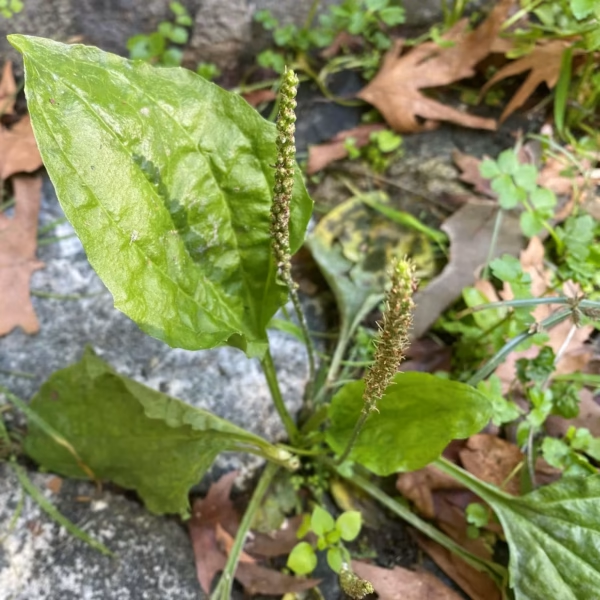
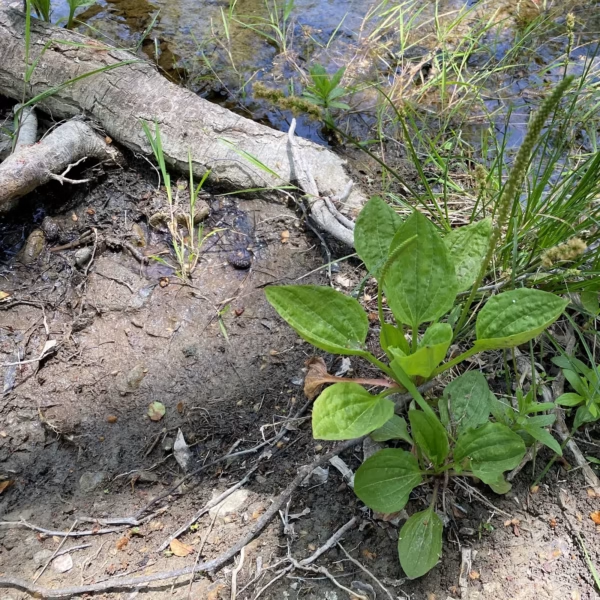
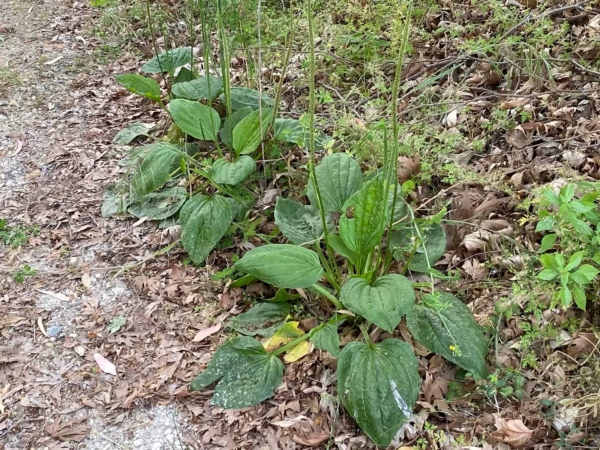
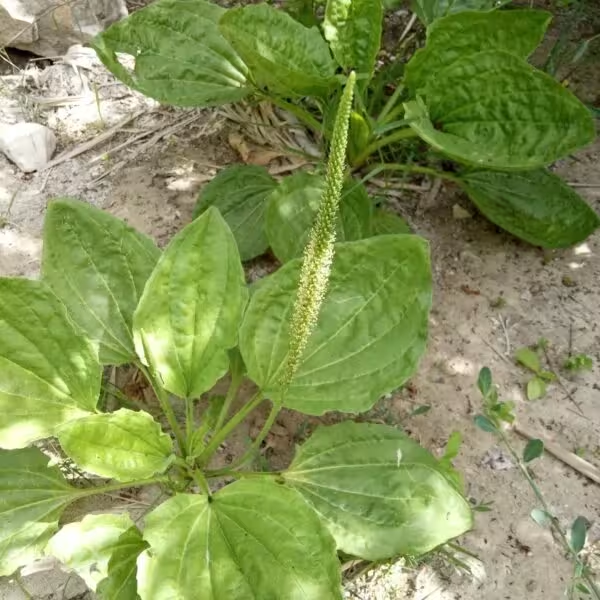
Plantago major subsp. major, commonly known as Common Plantain or Greater Plantain, is a perennial herbaceous plant in the family Plantaginaceae. It forms a basal rosette of broad, oval to broadly elliptic leaves with several conspicuous longitudinal veins, while its small, inconspicuous flowers are arranged in elongated spikes on leafless stalks. The plant is particularly well adapted to compacted soils, footpaths, lawns, roadsides and other disturbed habitats, where its low-growing leaves tolerate repeated trampling. Although often regarded as a weed, it is ecologically important as a source of seeds for wildlife and has a long history of traditional food and medicinal use. Its taxonomic distinction from Plantago major subsp. intermedia requires examination of reproductive structures, especially the bracts and seeds, rather than relying on leaf shape alone.
Common Cypriot Names
The formal Modern Greek rendering of the scientific name is "Πλαντάγο το μείζον υποείδος το τυπικό" [Plantago to mizon ypoidos to typiko], meaning approximately “the greater plantain, typical subspecies”.
Common English Names
- Common Plantain
- Greater Plantain
- Broad-leaved Plantain
- Broadleaf Plantain
- Great Plantain
- Large Plantain
- Cart-track Plant
- Cart Track Plantain
- Doorweed
- Dooryard Plantain
- Cuckoo's Bread
- Englishman's Foot
- Englishman's Footprint
- White Man's Foot
- White Man's Footprint
- Healing Blade
- Lamb's Foot
- Lark Seed
- Ripple Grass
- Roundelay Plantain
- Snakeweed
- Ripple-seed
- Rat's-tail Plantain
Common names vary geographically, and some names listed for Plantago major at species level may also be applied to other plantain taxa. The list above consolidates names reported by the Royal Horticultural Society, North Carolina State University and the EPPO Global Database. Not every vernacular name can be confirmed as exclusive to the autonymic subspecies.
Etymology of Plantago major subsp. major
The etymology of the genus name Plantago derives from the Latin plantago, a traditional name for plants of this group associated with planta, meaning “sole of the foot” or “sole of the foot-shaped surface”. The association is commonly explained by the broad, flattened leaves that spread close to the ground, resembling the sole of a foot. The specific epithet major is the comparative form of Latin magnus, meaning “large” or “great”, and therefore means “larger” or “greater”; This refers to the plant's comparatively broad leaves in relation to certain other plantain species. The subspecific epithet major repeats the species epithet because this is the autonymic subspecies: under botanical nomenclature, an autonym is automatically established when another subspecies within the species is formally published. It identifies the subspecies containing the nomenclatural type of Plantago major L. The name does not mean that every individual is necessarily larger than every individual of subsp. intermedia.
Key Characteristics for Diagnostic Identification
Identification within the genus Plantago in Cyprus should be based on a combination of vegetative and reproductive characters, with particular attention to the diagnostic features separating Plantago major subsp. major from Plantago major subsp. intermedia. Robert Desmond Meikle's two-volume Flora of Cyprus, published in 1977 and 1985 by the Bentham-Moxon Trust and the Royal Botanic Gardens, Kew, is a principal historical taxonomic reference for the island's flora. The following comparison uses published descriptions of the two taxa, but it should not be mistaken for a verbatim transcription of Meikle's dichotomous key. A fully exhaustive comparison of every character state requires direct verification against the original treatment and authenticated Cypriot specimens.
- Leaf blade shape: Subsp. major typically has broad, ovate to elliptic leaves with an abruptly narrowed base and a conspicuous petiole, whereas subsp. intermedia tends to have narrower, more elliptic to oblong-lanceolate leaves with considerable variation; therefore, leaf outline for both taxa must be assessed alongside reproductive characters.
- Leaf indumentum: Subsp. major leaves are generally glabrous or only sparsely pubescent, whereas subsp. intermedia leaves may be glabrous or puberulent (often feeling slightly rougher or scabridulous with fine hairs), requiring hairiness to be checked on mature leaves for both.
- Petiole: Subsp. major leaves are borne on relatively long, well-developed petioles, whereas subsp. intermedia is described as having a petiole that is typically as long as, or shorter than, the leaf blade.
- Flowering stalks (scapes): Both subspecies produce leafless flowering stalks rising from the basal rosette with potential variations in shape and hairiness, but subsp. major scapes vary widely with conditions while subsp. intermedia scapes are specifically described as equal to or exceeding the leaves.
- Inflorescence spike: Both taxa have numerous small flowers arranged along an elongated spike, but subsp. major typically features longer spikes, whereas subsp. intermedia is described as having a dense spike that is as long as or shorter than the remaining portion of the scape.
- Bracts: In subsp. major, bracts are typically shorter (less than half as long as the sepals), whereas in subsp. intermedia, the bracts are ovate, glabrous, 1–2 mm long, and key out as being more than half as long as the sepals.
- Seed number and shape: Subsp. major typically contains fewer, larger seeds (usually 4 to 12 per capsule), whereas subsp. intermedia is described as having approximately 14–34 seeds per capsule, with seeds about 1–1.5 mm long and ellipsoid or ellipsoid-trigonous in shape.
- Habitat and ecology: Subsp. major is a widespread, winter-hardy weed found along paths, gardens, and lawns, whereas subsp. intermedia is less winter-hardy and strongly associated with damp, seasonally flooded or muddy environments, saline/coastal margins, and moist trampled ground.
- Overall identification: For both subspecies, the most defensible identification combines mature leaves, flowering stalks, bract proportions relative to the sepals, and seed number and shape per capsule rather than relying on isolated traits.
Additional Identification Characteristics
Beyond the principal morphological characters, botanists can use the developmental stage of the specimen, the consistency of its characters across several leaves and inflorescences, and the condition of mature fruits to improve identification. A single small leaf from a drought-stressed plant may not represent the normal dimensions of the taxon. Likewise, seeds from immature capsules should not be used to establish seed number or mature seed shape. For difficult specimens, comparison with authenticated herbarium material and the full descriptions in Meikle's Flora of Cyprus is preferable to relying on general descriptions intended for other regions. The detailed character set above is a cautious comparative summary, not a claim that every character has been verified against all Cypriot collections.
Botanical Structure and Floral Details of Plantago major subsp. major
Growth Form and Leaves
This subspecies is a low-growing perennial herb with a basal rosette. Its leaves are generally broad and oval to elliptic, with conspicuous longitudinal veins extending from the base towards the apex. The leaf blade is borne on a petiole, and the plant's low profile allows it to persist in frequently disturbed locations. The dimensions and marginal dentition of the leaves can vary substantially between individuals and habitats, so the typical broad-leaved appearance should be regarded as a useful initial recognition feature rather than an infallible taxonomic test. RHS botanical profile.
Inflorescence and Flowers
The flowers are small and arranged closely along an elongated spike borne on a leafless scape. They are individually inconspicuous, and the spike may be overlooked when the plant is viewed from a distance. Their small size makes examination of bracts, sepals, corolla and stamens under magnification particularly important in taxonomic work. The flowers do not resemble the conspicuous petals of many garden herbs; instead, the dense spike is the main visible reproductive structure.
Fruit and Seed Production
The fruit is a capsule containing several seeds. Mature seed characters are important in separating closely related taxa within the Plantago major complex. Seeds are also significant ecologically because they can be dispersed from disturbed ground and establish new plants where the soil surface has been opened. The exact number of seeds per capsule should be measured on mature fruits rather than inferred from the appearance of the flowering spike.
Geographical Distribution and Habitat of Plantago major subsp. major
Plantago major is a widespread plant with a broad distribution across temperate Eurasia and additional regions. POWO records the species as native to Cyprus. The autonymic subspecies is accepted by POWO, but species-level distribution data should not automatically be interpreted as a complete, subspecies-specific distribution map.
Is Plantago major subsp. major Edible?
Edibility of the Leaves
Yes. The young, tender leaves of Plantago major subsp. major are edible and have traditionally been eaten as a wild leafy vegetable. They can be consumed raw when young and tender or cooked in dishes such as soups and stews. Older leaves tend to become tougher and more fibrous, making them less pleasant to eat.
Which Parts Can Be Eaten?
- Young leaves: The most commonly consumed part; they may be eaten raw or cooked.
- Mature leaves: Edible when properly identified, but often tougher and more fibrous. Cooking can make them easier to chew.
- Young flower spikes: Sometimes eaten when tender, although their texture becomes tougher as they mature.
- Seeds: The small seeds are edible, but collecting enough for culinary use can be time-consuming.
Flavour and Culinary Uses
The leaves have a mild, green flavour that can become more pronounced in older foliage. Young leaves can be added to salads, while cooking them with other greens can soften their texture. Remove tough leaf stalks if desired and wash the plant thoroughly before preparation.
Is It Safe to Eat?
Only consume plants that have been positively identified. Collect leaves from clean locations away from roadsides, pesticide-treated land, polluted ground and areas frequented by dogs or livestock. Wash them thoroughly under running water. Do not assume that every plant growing in a similar form is edible simply because it resembles this taxon.
Edibility does not mean that the plant is suitable for everyone or that it has proven medicinal benefits. If you are pregnant, breastfeeding, taking medication or have a known plant allergy, seek appropriate professional advice before using it medicinally. Do not use wild plants as a substitute for medical treatment.
Is Plantago major subsp. major Suitable for Gardens?
This subspecies can be cultivated in an informal wildlife garden or a low-maintenance area where its naturalistic appearance is welcome. It tolerates a range of soils and is particularly successful in compacted or disturbed ground, although it generally performs better when sufficient moisture is available. It is not an obvious choice for a formal ornamental border because its low rosette and flowering spikes are relatively modest, and it can spread into lawns or paths. Gardeners should consider whether they want a native-looking herbaceous ground plant or prefer a more ornamental species.
Toxicity and Safety
General Safety
Plantago major has a history of use as a food and traditional medicinal plant, but traditional use should not be treated as proof that every preparation, dose or route of administration is safe. The edible use of young leaves is documented in botanical literature. Nevertheless, plants collected from roadsides, polluted locations, heavily treated lawns or sites contaminated by animal waste should not be consumed. Washing alone cannot reliably eliminate every chemical contaminant or pathogen.
Allergic Reactions and Individual Sensitivity
People can respond differently to plant material, including through contact irritation or allergic reactions. Anyone who develops itching, swelling, a rash or other unexpected symptoms after handling or ingesting the plant should stop exposure and seek appropriate medical advice. Severe swelling, breathing difficulty or signs of anaphylaxis require emergency medical care. The possibility of individual sensitivity should be considered even when a plant has a long record of traditional use.
Pregnancy, Breastfeeding and Medication Use
Reliable clinical safety data for concentrated preparations of this particular subspecies during pregnancy and breastfeeding are insufficient to justify a general recommendation. People who are pregnant, breastfeeding, taking prescription medicines or managing a chronic medical condition should consult a qualified healthcare professional before using plant extracts or supplements. A history of culinary use does not establish the safety of concentrated extracts, tinctures or medicinal doses.
Correct Identification and Contamination
Safety begins with correct identification. Several species of Plantago can grow in similar habitats, and the presence of broad leaves alone is not sufficient to confirm a subspecies. Plants intended for food or medicinal use should be identified by a competent botanist or another suitably qualified expert. Wild plants should not be collected from sites treated with herbicides or pesticides or exposed to traffic-related contamination. This advice is especially relevant to a species that commonly grows in paths, lawns and other human-disturbed habitats.
Medicinal Properties
Traditional Use and the Evidence Base
Plantago major has a long history of traditional medicinal use in different parts of the world. The review by A.B. Samuelsen, “The traditional uses, chemical constituents and biological activities of Plantago major L.”, published in the Journal of Ethnopharmacology in 2000, surveys the plant's ethnobotanical use, chemical constituents and reported biological activities. It is an appropriate starting point for understanding the historical and experimental literature, but it is a review of the species and does not establish clinical efficacy for every subspecies or preparation.
Wound Care and Skin Applications
Leaves of Plantago major have traditionally been applied to minor wounds, skin irritation and other external complaints. Some experimental research has investigated extracts for biological activities potentially relevant to inflammation and wound repair. Such findings must be distinguished from well-controlled clinical evidence in humans. Laboratory effects do not establish that a raw leaf, homemade poultice or commercially available extract will safely or reliably heal a wound. Fresh plant material may introduce contaminants into broken skin, so it should not be used as a substitute for cleaning a wound, appropriate dressings or medical assessment when needed.
Anti-inflammatory and Antimicrobial Research
Published phytochemical and pharmacological research on Plantago major has investigated constituents and extracts for a range of biological effects, including anti-inflammatory and antimicrobial activity. These findings provide research questions rather than a blanket therapeutic claim. Extract composition can vary with plant part, growing conditions, harvesting time, extraction solvent and preparation method. Activity observed in a laboratory assay cannot be assumed to occur at a clinically effective concentration in a person. Claims that the plant treats a particular infection or inflammatory disorder require appropriate human clinical evidence for the specific preparation and use.
Digestive and Other Traditional Uses
Traditional medicinal records also describe the use of plantain leaves and seeds for digestive complaints and other conditions. However, the plant part and preparation matter: whole seeds, seed mucilage, fresh leaves and concentrated extracts are not interchangeable. Evidence relating to preparations from other Plantago species should not be attributed automatically to subsp. major. In particular, findings for psyllium products derived from other plantain taxa cannot be assumed to establish equivalent effects for this subspecies.
Clinical Limitations
The key distinction is between historical use, preclinical research and demonstrated clinical benefit. Traditional use can document how communities have employed a plant; chemical studies can identify constituents; laboratory and animal experiments can explore mechanisms. None of these evidence types independently proves that a treatment is effective and safe in humans. Before a medicinal claim is made for this taxon, the supporting study should be checked for the exact botanical identity, plant part, preparation, dose, study design and clinical outcome. There is insufficient basis here to recommend this subspecies as a treatment for a diagnosed disease or to establish a safe medicinal dosage.
Fascinating Insights About "Plantago major subsp. major"
A Plant Adapted to Trampling
One of the most remarkable features of common plantain is its ability to persist in places where many taller plants are repeatedly damaged. Its leaves grow in a low basal rosette, so the main leaf-producing region remains close to the soil surface. This growth form helps explain why it can survive in lawns, footpaths and compacted ground. The plant's ecology is therefore closely linked to human disturbance, rather than simply to its ability to grow in undisturbed natural vegetation.
The Meaning Behind “White Man's Footprint”
One of the English vernacular names recorded for Plantago major is “White Man's Footprint”. The name is associated with the plant's spread into disturbed ground alongside European settlement in parts of North America. It is a cultural and historical expression of the relationship between plant dispersal and human movement, not a formal botanical designation. The same plant can therefore be viewed as a persistent lawn weed in one context and as a historical indicator of human disturbance in another.
Wind Pollination in a Small-Flowered Plant
Despite its inconspicuous flowers, Plantago major is reported as wind-pollinated and outcrossing in the botanical literature. Its reproductive strategy shows that flowers do not need large, colourful petals to participate successfully in pollination. The elongated spikes expose numerous small flowers along a narrow structure, while pollen transfer depends substantially on air movement rather than on showy floral displays intended to attract animal pollinators.
A Taxonomic Name That Identifies the Typical Subspecies
The repeated epithet in Plantago major subsp. major is not a mistake or redundant editorial wording. It is the expected botanical form of an autonym, the automatically established name for the subspecies that contains the type of the species name. This convention is important when a species is divided into formally recognised subspecies, because it allows the typical taxon to retain a name tied to the original species name. POWO accepts the autonymic subspecies and separately recognises subsp. intermedia.