Cypriot names
Μητέρα, Τεύκριο το μικροποδιοειδές
Etymology of Teucrium micropodioides
The etymology of the genus name "Teucrium" [Τεύκριον] is Ancient Greek and was used by Dioscorides for several species in this genus. It is assumed to refer to King Teucer [Τεῦκρος] of Troy, who used the plant in his medicine; assumed, because there was also another famous Teucer, son of King Telamon of the Island of Salamis, today in Greece. Its epithet, "micropodioides" derives from the Greek "μικροποδιοειδές", meaning "small-footed".
Taxonomic Classification within the Diverse Lamiaceae Family
Belonging to the subfamily Ajugoideae, Teucrium micropodioides is part of a diverse genus containing over 250 species worldwide. Its specific epithet, "micropodioides," refers to its resemblance to the genus Micropus. Understanding its taxonomic position helps botanists track the evolutionary history of aromatic herbs across the Mediterranean basin.
Introduction to Teucrium micropodioides
Teucrium micropodioides, commonly known as the small-footed germander, is a resilient perennial subshrub native to the eastern Mediterranean, particularly Cyprus. It belongs to the Lamiaceae family and is well-adapted to rocky, calcareous soils. This plant is often found in open pine forests and scrublands, thriving in the intense sunlight of its natural habitat.
Distinctive Morphological Features of the Teucrium micropodioides Plant
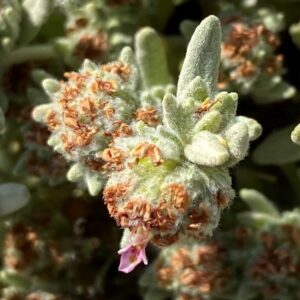
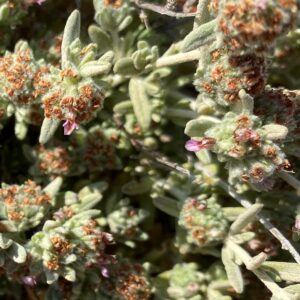
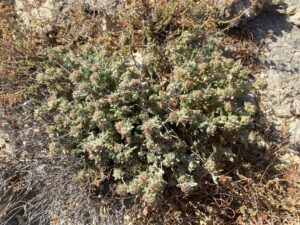
The plant is characterized by its densely branched, woody base and a silvery-gray appearance. This coloration comes from a thick layer of fine, white hairs that cover the stems and leaves. These hairs serve as a vital adaptation, reflecting solar radiation and reducing water loss through transpiration in arid Mediterranean environments.
Observations on the Foliage and Leaf Structure of Small-Footed Germander
The leaves of Teucrium micropodioides are small, narrow, and often have revolute margins, meaning the edges curl downward. They are arranged oppositely along the stems and emit a pleasant aromatic scent when bruised. This fragrance is a hallmark of the genus, signaling the presence of essential oils used for defense and pollinator attraction.
Characteristics of the Inflorescence and Seasonal Flowering Periods
During the flowering season, typically from late spring to early summer, Teucrium micropodioides produces clusters of delicate blossoms. The flowers are usually white or pale cream, occasionally featuring subtle purple veining. Like other germanders, the flowers lack an upper lip, a unique structural trait that makes the stamens and pistils highly visible to visitors.
Ecological Significance and Interaction with Mediterranean Pollinators
In its native ecosystem, Teucrium micropodioides plays a crucial role as a nectar source for various insects. Bees and butterflies are frequently seen visiting the blooms. By supporting these pollinators, the plant contributes to the overall biodiversity and health of the Mediterranean phrygana and maquis shrublands where it predominantly grows.
Traditional Medicinal Applications and Ethnobotanical History
Historically, species within the Teucrium genus have been utilized in folk medicine for their purported anti-inflammatory and antiseptic properties. While Teucrium micropodioides is less commonly cited than its relatives, local traditions sometimes involve using the dried aerial parts for herbal teas. However, modern scientific research is required to validate its specific safety and efficacy.
Cultivation Requirements for Arid Landscapes and Rock Gardens
For gardeners, Teucrium micropodioides is an excellent choice for xeriscaping or rock gardens. It requires well-draining soil and full sun exposure to maintain its compact, silvery form. Once established, it is remarkably drought-tolerant, making it a sustainable option for regions facing water scarcity or high summer temperatures.
Conservation Status and Environmental Threats in Native Habitats
While not currently classified as endangered, the natural populations of Teucrium micropodioides face pressure from habitat loss and overgrazing. Coastal development in the Mediterranean region can fragment its living spaces. Protecting these native shrublands is essential for ensuring that this specialist plant continues to thrive in its ancestral home.
Phytochemical Composition and Essential Oil Research Insights
Scientific interest in Teucrium micropodioides often focuses on its phytochemical profile. The plant contains various terpenes and flavonoids that contribute to its survival. Researchers study these compounds for potential antimicrobial activities, exploring how the plant's chemical defenses might be adapted for use in pharmaceutical or agricultural applications in the future.
The plant in Cyprus
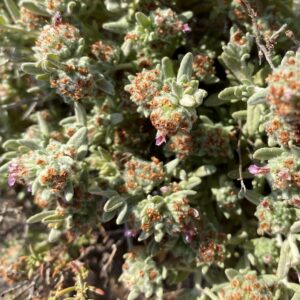
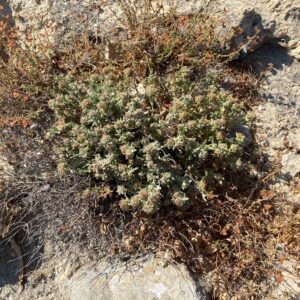
Teucrium micropodioides is a rather common endemic species that grows in dry rocky areas, derelict land, clearings in forests and, less commonly, on sandy seashores from sea level to 850 metres. Teucrium micropodioides is a mildly aromatic white felted perennial shrublet with a compact domed shape. The leaves are small and cottony. The flowers, which appear between April and July (April and May for the coastal areas), are purplish in colour forming dense, stalk-less heads.