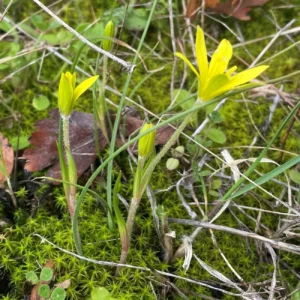
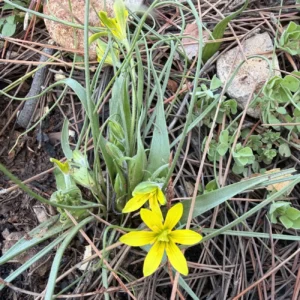
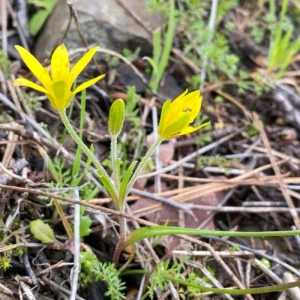
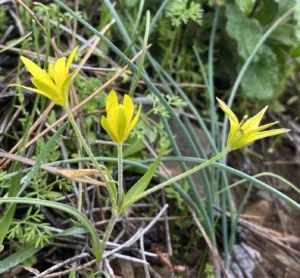
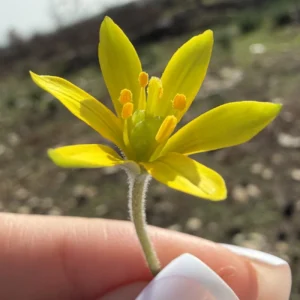
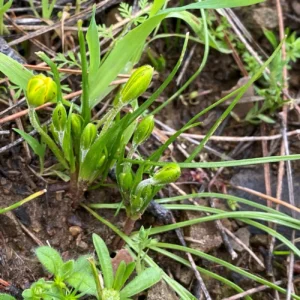
Gagea peduncularis is a small, bulbous perennial that belongs to the Lily family and is a frequent sight in the Mediterranean spring. This delicate herb is characterized by its slender appearance and bright, star-shaped yellow flowers that emerge early in the year. In Cyprus, it often populates open woodlands, rocky pastures, and grassy slopes, signaling the transition from winter to spring.
Cypriot Names
Γάγκεα η ποδισκοφόρος
Common English Names
In English, this species is most frequently called the Stalked Star-of-Bethlehem. Some enthusiasts also refer to it as the Pedunculate Gagea, a name that highlights its botanical structure. These names emphasize the plant's stellar floral shape and its membership in a genus known for its golden, ground-hugging blooms that decorate the Cypriot countryside.
Etymology of Gagea peduncularis
The etymology of the genus name "Gagea" honors Sir Thomas Gage, an English botanist. The species epithet comes from the Latin "peduncularis", referring to its prominent flower stalks (peduncles).
Synonyms and Historical Naming
The Stalked Star-of-Bethlehem has been known by various names as the understanding of the Liliaceae family has evolved over the decades. It was previously classified under the genus Ornithogalum by some early researchers before being moved to Gagea. These taxonomic shifts reflect the detailed study of its bulb structure and specific floral characteristics in Mediterranean populations.
Botanical Structure
Bulbous Underground System
The Stalked Star-of-Bethlehem grows from a small, ovoid bulb that serves as a vital energy reservoir during its dormant summer period. This bulb is usually protected by dark, fibrous tunics that help it survive the intense heat of the Cypriot soil. This underground strategy allows the plant to emerge rapidly once the winter rains provide sufficient moisture.
Basal and Cauline Foliage
The plant typically produces one or two very narrow, linear basal leaves that are often longer than the flowering stem itself. These leaves are grass-like in appearance and facilitate efficient photosynthesis in the bright Mediterranean light. Small, leaf-like bracts also appear on the stem just below the flowers, providing a delicate frame for the golden blooms.
Star-Shaped Floral Display
The flowers feature six lanceolate tepals that are bright yellow on the inside and often possess a greenish stripe on the exterior. These tepals spread widely to create the classic star shape that gives the Stalked Star-of-Bethlehem its common name. The flowers are borne on distinct pedicels, which are the stalks mentioned in its scientific name.
Geographical Distribution
This member of the Lily family is widely distributed across the eastern Mediterranean region and parts of Southeast Europe. Its range extends from Italy and Greece through the Balkans to Turkey and the Levant. It is highly adapted to the seasonal wet-and-dry cycles that define the climates of these specific geographical areas.
Distribution Across Cyprus
In Cyprus, you can find the plant growing across various altitudes, from the coastal plains to the higher elevations of the Troodos mountains. It is particularly common in the Akamas Peninsula and the limestone hills surrounding Limassol. It prefers open areas where it does not have to compete with tall, dense vegetation.
Early Spring Flowering
The flowering season usually begins in January and peaks in February or March, depending on the elevation and rainfall of the specific year. Each flower opens fully during sunny hours to attract early-emerging pollinators but may close during cloudy weather or at night. This seasonal timing makes it a welcome herald of the spring.
Habitat and Ecology
Preferred Growing Environments
This plant thrives in short-lived grasslands, open phrygana, and the edges of pine forests where sunlight reaches the ground. It prefers well-drained soils that remain moist during the winter but dry out completely during the summer dormancy. Such habitats are plentiful across the rocky and uncultivated landscapes of the island.
Survival in Arid Climates
The Stalked Star-of-Bethlehem is an expert at surviving the long, rainless Cypriot summers by retreating entirely into its underground bulb. This drought-avoidance strategy ensures that the plant is not damaged by the scorching heat. Once the autumn rains return, the root system reactivates to prepare for the upcoming flowering season in the spring.
Is Gagea peduncularis Suitable For Gardens?
Many gardeners ask, "Is Gagea peduncularis Suitable For Gardens?" It is an excellent choice for rock gardens or naturalized wildflower meadows that follow a Mediterranean schedule. It requires no summer watering and looks best when planted in small groups. However, it needs very well-drained soil to prevent the bulbs from rotting during the winter.
How to identify Gagea peduncularis
- Peduncularis's basal leaves are 2, thread-like, grooved and glabrous, longer than the plant´s height;
- The cauline leaves are 1-3, alternate, lanceolate, the lower born about the middle of the stem, the other 2 smaller, all covered with soft downy hairs internally and on the margins, more or less glabrous externally, 2-8 mm wide;
- The cauline leaves are distinctly different from the basal leaves;
- The peduncles are notably thick and hairy, distinguishing it from smooth-stemmed relatives;
- In the very center of the flower, you will find a distinct, three-angled green ovary;
- Six prominent yellow stamens surround the center, each topped with a small anther.