Tulipa cypria Stapf, a stunning member of the Liliaceae family, is known as the Cyprus Tulip. This plant has no major synonyms, remaining a distinct and stable species within its genus. This rare, wine-red perennial is a hallmark of the island’s spring, often found tucked away in traditional cereal fields and undisturbed uncultivated lands.
Cypriot Names
Τουλίπα η κυπρία, Λαλάς.
The name "Λαλάς" (Lalas) is deeply embedded in local culture, particularly among the villagers of the Maronite communities and the Akamas region. It is a term of endearment for this iconic flower that has been used by local farmers for generations.
Common English Names
- Cyprus Tulip
- Wine-red Tulip
Etymology of Tulipa cypria
The etymology of the genus name "Tulipa" comes from the Persian word "dulband", meaning "turban," which describes the shape of the bloom. The species name "cypria" confirms its status as an endemic plant, signaling to the botanical world that this specific taxon belongs exclusively to the island of Cyprus.
Other Synonyms
No significant botanical synonyms are recorded for this species. Since its identification by Otto Stapf, it has been recognized as a unique member of the Liliaceae family. This stability in nomenclature reflects its distinct morphological features that separate it from other Mediterranean members of the Tulipa genus.
Key Characteristics for Diagnostic Identification
According to the meticulous records of Robert Desmond Meikle (1923–2021), the legendary Irish botanist at the Royal Botanic Gardens, Kew, and author of the authoritative Flora of Cyprus, Tulipa cypria is identified by:
- Flower Color: A deep, saturated wine-red or crimson, featuring a prominent black blotch at the internal base.
- Leaf Margin: The plant typically bears 4 leaves; the lower ones are distinctly wavy (undulate) along the edges.
- Bulb Tunic: The ovoid bulb is enclosed in a leathery tunic that is densely lined with straight hairs on the inside.
- Anther Color: The anthers are a striking black or very dark purple, contrasting with the red perianth segments.
- Size: The stem is smooth and erect, usually reaching a height of 15 to 40 cm when fully mature.
- Bloom Shape: The solitary flower is cup-shaped, with six perianth segments that are 2.5–5 cm in length.
Botanical Structure and Floral Details of Tulipa cypria
Bulb Anatomy and Protection
The bulb of Tulipa cypria is a specialized storage organ that allows the plant to survive the long, rainless Cypriot summer. Its thick, hairy tunic acts as insulation against extreme soil temperatures. This underground structure remains dormant for most of the year, waiting for the winter rains to trigger growth.
Foliage and Undulate Leaves
The leaves of Tulipa cypria are lanceolate and glaucous, meaning they have a waxy, blue-green coating. A key diagnostic feature mentioned by Meikle is the undulate, or wavy, nature of the leaf margins. This distinctive texture helps botanists identify the species even before the flower spike has fully emerged.
The Internal Floral Pattern
Inside the wine-red cup, the flower reveals a dark, almost black, basal blotch. This mark is often bordered by a very faint yellow line, creating a visual target for pollinators. This "eye" is a critical evolutionary trait that distinguishes Tulipa cypria from other red tulips found in the region.
Geographical Distribution and Habitat of Tulipa cypria
Global Distribution and Range
On a global scale, Tulipa cypria is a strict endemic to the island of Cyprus. It is not found naturally in any other part of the world. This narrow geographic range makes it a high-priority species for international conservation, as its entire genetic diversity is contained within one small territory.
Distribution in Cyprus
In Cyprus, this species is found in the Akamas Peninsula at Neo Chorio, Mammari, and Denia (Villages controlled by the Republic of Cyprus), and villages like Myrtou, Panagra, and Kormakitis (in Occupied Cyprus). It grows in cereal fields and pastures from sea level up to 300 meters, blooming from March to April.
Conservation Status and Threats
Tulipa cypria is currently listed as Endangered in the Red Data Book of the Flora of Cyprus. The primary threats to its survival include the transition to intensive agriculture and the use of heavy herbicides. Illegal picking by visitors also poses a significant risk to the remaining wild populations.
Is Tulipa cypria Suitable for Gardens?
When asking "Is Tulipa cypria Suitable for Gardens?", the answer is generally no for private growers. As a protected endemic, it is illegal to remove bulbs from the wild. Furthermore, its reliance on specific soil conditions and its slow reproductive cycle make it very difficult to maintain in a domestic setting.
Fascinating Facts About Tulipa cypria
Meikle’s Research and Kew Gardens
Robert Desmond Meikle spent years ensuring that the unique characteristics of Tulipa cypria were correctly documented at the Royal Botanic Gardens, Kew. His work was pivotal in establishing the plant's status as a distinct species, rather than just a variation of the mainland Tulipa agenensis, which it closely resembles.
Evolutionary Adaptation to Agriculture
Historically, Tulipa cypria adapted to live alongside traditional farming. It thrived in fields where farmers used shallow plows, which did not disturb the deep-seated bulbs. Modern mechanical plowing is much deeper, which is one of the reasons the species is now struggling to survive in its traditional agricultural habitats.
Genetic Uniqueness of the Island Population
Research conducted by the Cyprus Agricultural Research Institute suggests that the isolation of Tulipa cypria has led to a very specific genetic makeup. This genetic bottleneck makes the population vulnerable to climate change but also provides a unique opportunity for scientists to study how island endemics diverge from their mainland ancestors.
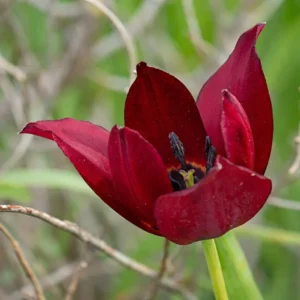
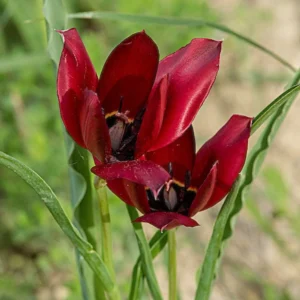
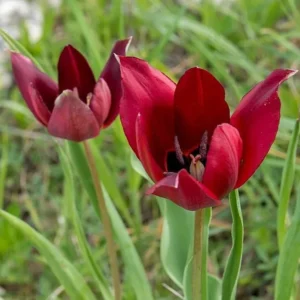
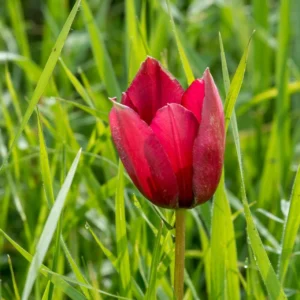
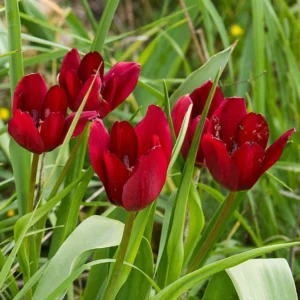
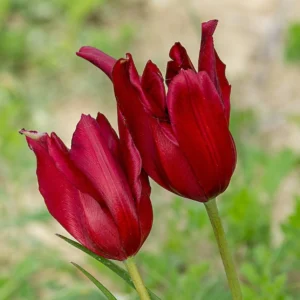
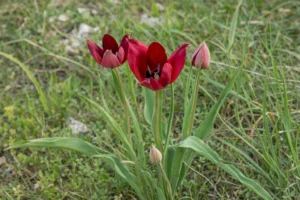
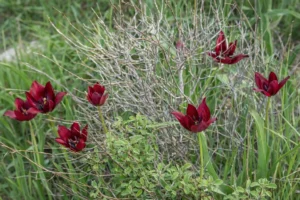
Photo credits: Pavlos Nacouzi