Ελξίνη η ιουδαϊκή
Etymology of Parietaria judaica
The etymology of the plant name Parietaria judaica offers insights into both its physical characteristics and historical associations. The genus name, Parietaria, is derived from the Latin word "paries," meaning "wall." This is a direct reference to the plant's favored habitat, as it commonly grows in cracks and crevices of old walls, ruins, and stony areas. This preference for walls has also led to its common English name, "Pellitory-of-the-wall."
The specific epithet, judaica, translates to "of Judaea" or "Jewish." This part of the name indicates its geographical origin or prevalence in the region of ancient Judaea, which is present-day Palestine or the Middle East. The scientific name was formally coined by Carl Linnaeus in 1763, based on a specimen collected in Palestine, thus solidifying the geographical connection in its botanical designation.
Overview and Habitat of Parietaria judaica
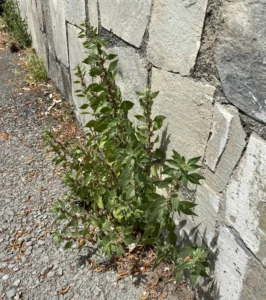
Parietaria judaica, commonly known as Pellitory-of-the-wall or Spreading Pellitory, is a herbaceous perennial flowering plant belonging to the Urticaceae family, which also includes nettles. It is native to the Eastern Mediterranean and Middle East, but has become widely naturalized as an an urban weed across many parts of the world, including Europe, North and South America, and Australia. Its name reflects its preferred habitat, as it frequently grows in cracks in walls, pavements, and stony areas, thriving in disturbed urban environments and benefiting from the urban heat island effect in colder climates.
Physical Characteristics of Parietaria judaica
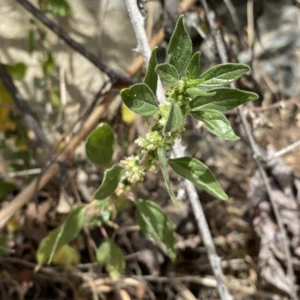
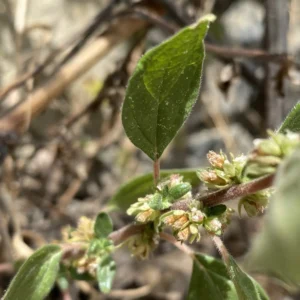
This plant typically grows as an upright to sprawling, much-branched herb, reaching up to 50 cm (and occasionally up to 110 cm) in height. Its stems can be greenish-brown or reddish-brown and are often somewhat woody and brittle at the base. The leaves are alternate, oval to lanceolate in shape, and usually 3-6 cm long, with a short stalk. Both the leaves and stems are covered in fine, irregularly curled hairs that can feel sticky to the touch. The flowers are very small, greenish-white or pink, and clustered in the leaf axils. They are wind-pollinated, and the plant can flower throughout the year, with the main flowering seasons in autumn and spring in Mediterranean regions.
Allergenic Properties and Traditional Uses of Parietaria judaica
While Parietaria judaica is a robust and adaptable plant, its most significant impact is often related to human health. Its pollen is a potent allergen and a major cause of allergic rhinitis (hay fever) and asthma, particularly in warmer countries. Contact with the plant's sticky hairs can also cause skin irritation in some individuals. Despite its allergenic potential, it has been traditionally used in herbal medicine for its diuretic and anti-inflammatory properties, often applied for kidney and bladder complaints, as well as externally for burns and skin conditions. However, due to the high risk of allergic reactions, its medicinal use is generally advised against for those with sensitivities.
Parietaria judaica in Cyprus
Parietaria judaica is considered indigenous to Cyprus, meaning it is native to the island. It is not endemic, as its native range extends across the Eastern Mediterranean, North Africa, Europe, and parts of Asia. In Cyprus, it is widely distributed across all geographical divisions (Divisions 1-8 in botanical terms), indicating its prevalence throughout the island. You'll find it from coastal areas right up to significant altitudes (1075 meters).
Habitat in Cyprus
As its common name "Pellitory-of-the-wall" suggests, this plant thrives in human-disturbed environments. In Cyprus, it is ubiquitous in places like cracks in old walls, pavements and sidewalks, ruins and stony areas, roadsides and waste places, and even hedgebanks. It prefers well-drained to dry, alkaline soils, often in full sun or semi-shade. Its ability to tolerate dry summers and mild winters makes it well-suited to the Cypriot climate.
Flowering Period in Cyprus
One of the most notable features of Parietaria judaica in Cyprus, and indeed in other Mediterranean climates, is its prolonged flowering period. It can flower almost year-round, from January to December. However, the main flowering seasons are typically in the spring and autumn. These periods, when pollen production is at its peak, are when it causes the most significant issues for allergy sufferers on the island. The warmer temperatures and suitable moisture levels during these seasons contribute to abundant pollen release.