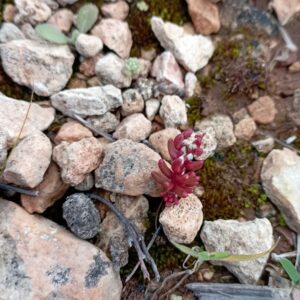
Sedum microcarpum is a fascinating, diminutive succulent that thrives in the rocky crevices of the Eastern Mediterranean. Despite its tiny stature, Sedum microcarpum is a master of survival, painting arid landscapes with vibrant shades of green and fiery red during its peak growing seasons.
Cypriot names
Σέδον το μικρόκαρπο
Etymology of Sedum microcarpum
The etymology of the genus name "Sedum" (first known use in 1760) derives from the Latin verb"sedo", meaning "to sit, to settle"; Pliny refers to the plant sitting among others on rocks. The word "Sedum" is Latin and means "houseleek". "Microcarpum" comes from the Ancient Greek "μικρόκαρπος" [mikrokarpos], from "μικρός" [mikros], meaning "small", and "καρπός" [karpos], meaning "fruit", hence "bearing small fruit" for its really tiny fruit.
Global Distribution and Mapping
The geographical range of Sedum microcarpum is primarily concentrated within the Eastern Mediterranean. This includes prominent populations throughout Cyprus, Turkey, Syria, Israel, and Jordan. Within these regions, it occupies specific ecological niches where the climate features distinct wet winters and bone-dry summers, allowing the species to flourish in areas where less hardy plants would surely wither.
Specific Terrain and Altitudes
This succulent favors limestone pavements, volcanic outcrops, and basaltic soils. It is frequently observed from coastal sea levels up to elevations of approximately 1,200 meters. The plant often colonizes the thin "terrarossa" soil found in rock fissures, creating miniature oases of life across otherwise barren and rugged mountain landscapes.
Growth Cycle and Longevity
Many enthusiasts ask if Sedum microcarpum is a perennial. Actually, Sedum microcarpum is primarily an annual succulent. It completes its entire life cycle - from germination to seed dispersal - within a single year. This rapid growth makes Sedum microcarpum an exciting plant to observe as it quickly carpets bare ground before vanishing and returning next season.
Master of Adaptation
The survival strategy of Sedum microcarpum involves specialized CAM photosynthesis, allowing it to conserve water by breathing at night. This metabolic trick ensures that Sedum microcarpum remains plump and hydrated even when the scorching sun evaporates moisture from everything else in its rocky habitat.
Seasonal Color Shifts
One of the most exciting traits of Sedum microcarpum is its dramatic color transformation. While it starts as a bright green sprout, environmental stress from high light or drought triggers anthocyanin production, turning Sedum microcarpum into a brilliant, ruby-red carpet that hugs the ground.
Sedum microcarpum in Cyprus
Sedum microcarpum is a small annual plant growing on rocky places and calcareous ground, up to 8cm high. It is encountered all around Cyprus, except for the Karpasia peninsula, at an altitude of up to 600 metres. It blooms from February until April.