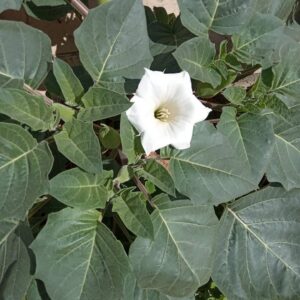
Ζορνές, Ντατούρα η αβλαβής
Etymology of Datura innoxia
The etymology of the genus "Datura" is taken from Sanskrit "धतूरा" [dhatūra], meaning "thorn-apple", and ultimately from Sanskrit "धत्तूर" [dhattūra], meaning "white thorn-apple", referring to the Datura metel species of Asia; white because of the white flowers of Datura metel and thorn-apple because of the prickly-spined fruit resembling an apple. The first known use of the word "datura" was in 1598.
The Latin epithet "innoxia'' was named after the English botanist Philip Miller and means "harmless, not noxious", in 1768. At the time, he believed this specific species lacked the "noxious" or "prickly" characteristics found in other members of the Datura genus, specifically regarding the texture of the leaves.
The Great Misnomer
The name is misleading because Datura innoxia is actually one of the most toxic plants in the nightshade family. The "harmless" label refers only to the soft, velvety hairs on the leaves, which lack the stinging or irritating properties of some other plants. Chemically, however, it remains saturated with dangerous tropane alkaloids that can be fatal.
Naming Confusion
For a long time, there was significant confusion between Datura innoxia and Datura metel. In early botanical literature, the two were often mixed up, leading to inconsistent naming conventions. Some early researchers mistakenly thought innoxia was a "milder" version of the more aggressive Datura stramonium (Jimsonweed), which further solidified the inaccurate "harmless" name.
Modern Scientific View
Today, botanists acknowledge the name as a "misnomer"—a name that is technically incorrect or misleading. In ecological terms, the plant is anything but harmless; it is a hardy "pioneer species" that can quickly take over wasteland and pastures. Because livestock often avoid it due to its smell, it can outcompete native forage plants with ease.
Botanical Characteristics
Datura innoxia, commonly known as downy thorn-apple, is a sprawling perennial herb characterized by its grayish-green, velvety foliage. The entire plant is covered in soft, short hairs that create a distinctive "downy" texture. It produces large, white, trumpet-shaped flowers that can reach up to seven inches in length.
Nocturnal Blooming
The flowers of this species are famously nocturnal, unraveling in the late evening to release a powerful, sweet fragrance. This scent is specifically evolved to attract night-flying pollinators, primarily hawkmoths. By noon the following day, the blossoms typically wither, having completed their brief but intense reproductive cycle.
Distinctive Spiny Fruit
Following the flowering stage, the plant develops spherical, nodding fruit capsules covered in numerous slender spines. These "thorn-apples" protect the developing seeds until they are ripe, at which point the capsule splits open irregularly. The spines also aid in dispersal by snagging onto the fur of passing animals.
Extreme Chemical Toxicity
Like all members of the nightshade family, D. innoxia contains dangerous levels of tropane alkaloids, including scopolamine and atropine. Every part of the plant, especially the seeds, is highly toxic if ingested. Poisoning symptoms range from severe hallucinations and dilated pupils to respiratory failure and death in extreme cases.
Modern Invasive Status
While valued as an ornamental for its dramatic blooms, D. innoxia is now considered an invasive weed in many regions worldwide. It thrives in disturbed soils, sandy banks, and roadsides, often outcompeting native vegetation. In some areas, its cultivation is strictly prohibited due to its toxicity and aggressive spreading.
Historical Ritual Use
Indigenous cultures in the Americas have used this plant for millennia in sacred and medicinal contexts. The Aztecs referred to it as toloatzin, utilizing it as an anodyne for wounds. Various tribes incorporated it into initiation rites and spiritual ceremonies to induce visions and connect with the spirit world.
Datura innnoxia in Cyprus
Datura innoxia is a relatively common naturalized, non-invasive plant. It primarily appears in gardens. It is encountered up to a maximum altitude of 150 metres in southwestern, central-southern, southeastern, and central-northern Cyprus. It usually blooms between June and October.