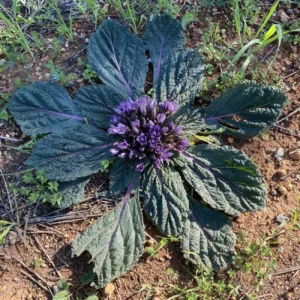
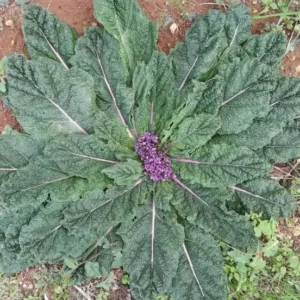
Mandragora officinarum is a legendary perennial herb belonging to the Nightshade family, famously known for its large, fleshy taproot that often resembles a human form. This stemless plant features a rosette of broad, dark green leaves that lie flat against the ground.
Cypriot names
Καλάδρωπος, Μηλοπιπονιά, Παπούτσα, Μανδραγόρας ο φαρμακευτικός
Common English Names
In English, the most frequent name for this plant is the Autumn Mandrake. Some people also refer to it simply as the Mandrake or the Mediterranean Mandrake to distinguish it from northern European species.
Etymology of Mandragora officinarum
The name of the genus derives from the Ancient Greek "μανδραγόρας" [mandragoras], and the etymology is unknown. "Officinarum" is New Latin and means "of or belonging to an officina". The "officina" was the building in medieval monasteries where monks prepared medicine. It was often connected to the herb garden.
Synonyms and Historical Naming
The Autumn Mandrake was previously categorized under various names such as Mandragora autumnalis to highlight its unique flowering season in the Mediterranean. While modern botanists often group these variations together, the distinction remains important in local records. These taxonomic changes reflect the ongoing study of its alkaloid content and its specific morphological variations across different islands.
Botanical Structure and Morphology
Fleshy Taproot System
The Autumn Mandrake is most famous for its thick, branched taproot which can extend deep into the soil. This root serves as a major storage organ, allowing the plant to survive the long, dry Cypriot summers in a state of complete dormancy. Historically, the bifurcated shape of the root led to many myths regarding its supernatural powers.
Broad Rosette Foliage
The leaves are ovate and wrinkled, growing in a dense rosette that can reach up to forty centimeters in diameter. They have a slightly unpleasant odor when bruised, which is a common trait among many members of the Nightshade family. This ground-hugging arrangement helps the plant capture maximum sunlight during the shorter days of the Mediterranean winter.
Bell-Shaped Winter Flowers
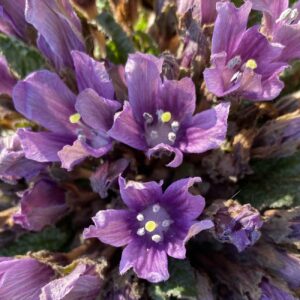
The flowers are bell-shaped and vary in color from pale violet to a deep purple-blue, appearing in clusters at the center of the leaf rosette. Each flower has five lobes and emerges directly from the base of the plant without a visible stem. These blooms appear when most other vegetation is dormant, providing a rare splash of color.
Geographical Distribution
This member of the Nightshade family is native to the lands surrounding the Mediterranean Sea, including Southern Europe and North Africa. It is highly adapted to the "Stenomediterranean" climate, which is characterized by mild, wet winters and hot, dry summers. Its presence is often an indicator of ancient agricultural land or historically disturbed soils.
Distribution Across Cyprus
In Cyprus, the Autumn Mandrake is common in the lowlands and can be found in abundance around the Akamas Peninsula and the Paphos district. It thrives in open areas where it is not shaded by tall trees or dense scrub. You will often see its large green rosettes growing alongside old stone walls or abandoned vineyards.
Late Autumn Flowering
Unlike many other plants, the flowering season for this species begins in late autumn and continues through the middle of the winter. In Cyprus, you can see the purple flowers from November until February, followed by the development of large, yellow-orange fruits. This unusual timing allows the plant to avoid the intense competition of the spring bloom.
Medicinal Uses and Folklore
Ancient Anesthetic Properties
Historically, the Autumn Mandrake was one of the world's first true anesthetics. Before the advent of modern chemistry, Greek and Roman surgeons would boil the root in wine to create a draught that induced a deep, death-like sleep in patients. This allowed for complex surgical procedures to be performed while the patient remained completely insensible to pain.
Traditional Pharmacological Effects
The plant’s "magic" is the result of tropane alkaloids, specifically hyoscyamine, scopolamine, and atropine. While these are dangerous in high doses, they are still utilized in modern medicine for treating motion sickness and as antispasmodics. The Autumn Mandrake served as a living laboratory for compounds that were essential for the development of early pharmaceutical sciences.
Habitat and Cultivation
Preferred Soil Conditions
This plant prefers deep, fertile, and well-drained soils that allow its massive root system to expand without restriction. It is frequently found in habitats that have been significantly influenced by human activity over many centuries. Such environments provide the nutrient-rich conditions that the Autumn Mandrake requires for its rapid winter growth.
Is Mandragora officinarum Suitable For Gardens?
While it is a spectacular conversation piece, its extreme toxicity makes it unsuitable for any area frequented by children or pets. It requires deep, sandy soil to accommodate the massive root and absolute dry conditions during its summer dormancy.