Date Created: 20.03.2022
Last Modified: 02.04.2026
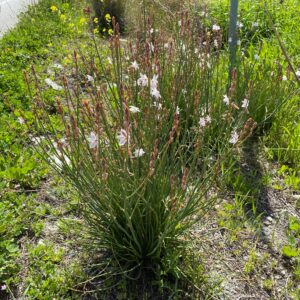
Asphodelus fistulosus L. is the Latin name for the Hollow-stemmed Asphodel, a slender perennial or biennial belonging to the Asphodelaceae family. It is occasionally known by the synonym Asphodelus fistulosus var. fistulosus. This species is a common sight in the Cyprus lowlands, often forming delicate, airy clusters of white flowers along roadsides and in sandy coastal habitats during the early spring months.
Common Cypriot Names
Ασφόδελος ο σωληνώδης
Common English Names
- Hollow-stemmed Asphodel
- Onionweed
Etymology of Asphodelus fistulosus
The etymology of the genus name Asphodelus is derived from the Ancient Greek "ἀσφόδελος" [asphódelos], a term of Pre-Greek origin associated with the meadows of the afterlife. The species name fistulosus comes from the Latin "fistula," meaning "pipe" or "tube," which refers to the characteristic hollow, pipe-like structure of both its leaves and flowering stems.
Synonyms
- Asphodelus fistulosus var. fistulosus
- Asphodelus morisianus Parl.
How To Identify Asphodelus fistulosus
According to the definitive botanical keys established by Robert Desmond Meikle (1923–2021) in his comprehensive Flora of Cyprus, this species is distinguished by several specific morphological features, which separate it from Asphodelus ramosus and Asphodelus tenuifolius:
- Inflorescence Branching: Asphodelus fistulosus usually features a simple or only sparingly branched flowering stem. This contrasts sharply with the massive, complexly branched panicle of Asphodelus ramosus, while Asphodelus tenuifolius is typically even smaller and more frequently unbranched.
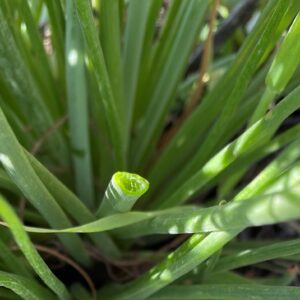
- Leaf Morphology and Structure: The leaves are semi-cylindrical and hollow (fistulose), resembling those of a young onion. This is a primary distinction from Asphodelus ramosus, which has broad, flat, sword-shaped leaves. While Asphodelus tenuifolius also has hollow leaves, they are much more slender and often shorter.
- Root System and Longevity: This species is a perennial or biennial with short, slender fibrous roots. It lacks the massive, spindle-shaped tuberous roots found in Asphodelus ramosus. Unlike the strictly annual Asphodelus tenuifolius, it persists for more than one growing season.
- Tepal and Flower Size: The flowers have tepals approximately 7–12 mm long, which are slightly smaller than those of Asphodelus ramosus (10–15 mm). However, they are significantly larger than the minute flowers of Asphodelus tenuifolius, which rarely exceed 5 mm in length.
- Capsule and Seed Shape: The fruiting capsules are relatively small (4–6 mm) and globose. They are smaller than the obovoid capsules of Asphodelus ramosus (5–10 mm), and they lack the distinctively wrinkled (rugose) texture seen in the tiny capsules of Asphodelus tenuifolius.
Botanical Structure of Asphodelus fistulosus
The Inflorescence
The flowering stalk is smooth, green, and hollow, typically rising to a height of 20–60 cm. It usually remains simple or branches only once or twice near the top. The flowers are arranged in a moderately loose raceme, opening progressively from the bottom to the top of the spike.
Floral Details
Each star-shaped flower consists of six white tepals, each marked with a prominent pinkish or brownish longitudinal stripe on the underside. The stamens are arranged in two whorls of three, with filaments that broaden significantly at the base to enclose the ovary, a trait common to the genus.
Geographical Distribution and Habitat of Asphodelus fistulosus
Asphodelus fistulosus is native to the Mediterranean region, Southern Europe, Northern Africa, and Western Asia. It is a highly adaptable plant that has become naturalized in many other parts of the world with Mediterranean climates, including parts of Australia and North America, where it is often considered an invasive weed.
Distribution in Cyprus
In Cyprus, Asphodelus fistulosus is not endemic but is an indigenous species. It is found primarily on roadsides in lowland regions. Some common places found include the main road of Pano Kyvides, the avenue from Kato Polemidia to the Mall, the Paphos - Stroumpi road, and the Aristotellous Savva avenue in Anavargos.
Is Asphodelus fistulosus Suitable for Gardens?
While it possesses a delicate, wild beauty, it is rarely planted intentionally in Cyprus gardens. In many regions, it is viewed as an "Onionweed" because of its ability to spread rapidly via seed in disturbed soil. However, it can be effective in wilder, drought-tolerant meadows if its spread is carefully managed.
Toxicity of Asphodelus fistulosus
Like its larger relative, this plant contains raphides of calcium oxalate, which act as a physical deterrent against herbivores. While it is not considered highly poisonous to humans, the consumption of the raw plant causes irritation to the mucous membranes. Livestock generally avoid grazing on it, allowing it to flourish in overgrazed areas.
Medicinal Properties of Asphodelus fistulosus
In traditional folk medicine, the seeds and leaves have been used topically to treat various skin ailments, such as ecthyma and minor inflammations. Some cultures have used the crushed leaves as a poultice to soothe insect bites or stings, relying on the plant's mild cooling and anti-inflammatory properties.
Contemporary research into its chemical profile has identified the presence of various flavonoids and anthraquinones. These compounds are known for their potential antioxidant and antimicrobial effects. Despite these findings, the plant is not commonly used in modern clinical herbalism, and its internal use is generally avoided due to the lack of safety data.
Fascinating Facts About Asphodelus fistulosus
The "Onionweed" Misnomer
The plant is frequently mistaken for a member of the onion family (Allium) due to its hollow, tubular leaves and bulb-like appearance when young. However, it lacks the characteristic sulfurous odor of onions. This deceptive appearance often leads gardeners to pull it up, fearing an invasion of wild garlic or onions.
Survival in Sandy Wastelands
This species is remarkably salt-tolerant, allowing it to colonize sandy coastal dunes where few other flowering plants can survive. Its hollow leaves are a brilliant adaptation to minimize water loss from evaporation while maximizing the internal storage of moisture, a critical strategy for life in the saline Mediterranean spray zone.
Prolific Seed Production
A single healthy plant can produce thousands of seeds in one season. These seeds are uniquely shaped to be dispersed by wind or water, allowing the species to quickly inhabit bare soil after autumn rains. This high reproductive rate is why it is often the first flower to colonize abandoned construction sites in Cyprus.
Historical Use in Crafts
In some Mediterranean rural communities, the dried, hollow stems were occasionally collected and used as a primitive material for weaving small, delicate items or as light filler for traditional handicrafts. Its lightness and relative strength when dry made it a useful, if temporary, resource for shepherds and farmers.
Indicators of Soil Disturbance
The presence of Asphodelus fistulosus is often a biological "red flag" for soil disturbance. It rarely competes well in dense, established forests or stable grasslands. Instead, it thrives where the earth has been turned or overgrazed, marking the transition between human-altered landscapes and the true Mediterranean wilderness.